Yacht cruise – a tourist service, passenger transport, or the hire of a means of transport? 

In our practice, we are often asked questions concerning the organisation of cruises. One of the most common is whether a cruise should be treated as a transport service, a tourist service or the hire of a means of transport. The answer to this question has significant practical implications, as it gives rise to several legal and tax consequences. 

This is even more important given that tax legislation treats the issue of transport differently from, for example, the Act on Tourist Events. 

When a cruise constitutes a transport service 

A cruise may be regarded as a passenger transport service. According to court rulings, the essence of a transport service is the movement of people or cargo from one place to another (e.g. the judgment of the Provincial Administrative Court in Wrocław of 27 February 2024, I SA/Wr 602/23). 

Such a cruise is primarily intended to enable the passenger to travel from point A to point B, and its characteristic features include, amongst others: 

  • a specified route of transport,
  • transport as the dominant element of the service,
  • the absence of an extensive recreational or tourist programme,
  • the ancillary nature of additional services. 

The last of these characteristics is of particular significance in practice. It is precisely the scope of additional services that most often determines whether a cruise remains a transport service or begins to take on the character of a tourist service. 

Is the purpose of the cruise really transport? 

Authorities and courts are increasingly examining not only the way the cruise is organised, but above all its commercial purpose. When assessing the nature of a cruise, it is worth asking yourself a few questions: 

  1. What services does the cruise include?
  2. What does the cruise participant actually expect?
  3. Would a passenger choose such a cruise solely for the purpose of travelling from point A to point B? 

Re. 1 What services are included in the cruise? 

Assessing the nature of a cruise requires an analysis of all the elements that make up the service offered. It is clear that during a multi-day cruise, in addition to the journey itself, passengers benefit from a range of additional services, such as meals, accommodation on the yacht, and even team building “events” or training sessions. 

The more extensive the scope of these services, the more difficult it is to consider transport as the predominant purpose. 

In its judgment of 9 September 2016 (I FSK 1260/15), the Supreme Administrative Court analysed an activity involving the organisation of fishing trips. The organiser provided participants not only with the cruise itself, but also with meals, accommodation on board, fishing tackle, containers for storing caught fish, space to store their own equipment, insurance, and even fish gutting and filleting services. 

The organiser claimed that the dominant element of the service was the maritime transport of passengers, whilst the other services were of an ancillary nature. The tax authorities, on the other hand, argued that customers did not take part in the cruises in order to travel from one place to another, but to take part in recreational activities such as sea fishing, diving or relaxing at sea. 

The court noted that, under this model, participants did not use the cruise to travel from one place to another – transport merely served an ancillary function to the main service, which was participation in recreational and leisure activities. 

This ruling clearly demonstrates that the more extensive the range of services accompanying the cruise, the greater the risk that the service will be deemed to be of a tourist or recreational nature, rather than a transport service. 

Re. 2 What does a passenger expect from a cruise? 

A very important criterion is the passenger’s perspective. Authorities are increasingly analysing what, from the passenger’s point of view, constitutes the true value of a journey. 

It is worth asking: what is the passenger actually paying for? 

If the passenger’s main expectation is to travel quickly and safely to a specific destination, and other services are of secondary importance, then the case for classifying the cruise as a transport service is much stronger. 

However, if a passenger chooses a cruise primarily for leisure, to gain sailing experience, or for tourist attractions, then transport can only be regarded as an ancillary element to the main service. 

This was the position set out by the Director of the National Tax Information Service in the interpretation dated 8 April 2025 (0113-KDIPT1-2.4012.195.2024.2.KW). The applicant consistently argued that it primarily provides passenger transport services, rather than tourism or training services. It pointed out that the essence of the service is the carriage of participants between specified ports, along a pre-determined route and within a specified timeframe. In support of this position, it emphasised that: 

  • it issues personalised tickets for a specific route,
  • it does not act as a tour operator,
  • the element of gaining sailing experience is merely incidental and results from the specific nature of travelling by yacht. 

The tax authority did not agree with this approach. It held that even if the participants in the cruise are signed on as crew members, perform on-board duties and gain practical sailing experience, this does not automatically mean that the service is not of a tourist nature. 

In such a model, the essence of the service lies not only in learning to sail, but also in the very act of participating in the yacht trip and the associated elements. This argues in favour of classifying the service as a tourist service. 

Re. 3 Would the passenger have chosen this cruise solely for the purpose of transport? 

This question is of particular significance and often provides the best insight into the true nature of the service. 

If the cruise participant: 

  • could have easily used another means of transport,
  • chose the cruise despite the longer journey time,
  • accepts a higher price because of the additional attractions, 

then it may be difficult to demonstrate that transport alone constituted the essence of the service. 

In the case of many tourist or training cruises, the route and destination are of secondary importance. What becomes important is the very act of participating in the cruise, gaining experience, recreation or the completion of a training programme. In such situations, the classification of the service as a transport service may be called into question.  

When a cruise becomes a tourist service 

When a cruise is not solely for the purpose of transporting passengers but is a comprehensive service that includes elements of leisure and recreation, it begins to take on the character of a tourist service. Factors such as a leisure programme, port calls combined with sightseeing, or entertainment activities may support this classification of the service. 

In an interpretation dated 4 June 2024 (0113-KDIPT1-2.4012.195.2024.2.KW), the Director of the National Tax Information Service concluded that ‘the service (…) fulfils the basic criteria for tourism – leisure, a change of scenery and gaining new experiences. The essence of the service is to meet customers’ needs for leisure associated with their recreational activities, including the experience of travelling on an ocean-going yacht, participating in the operation and maintenance of the yacht during the cruise, visiting places of interest along the route, both from on board the vessel and whilst the vessel is in a particular port, as well as relaxation, and not merely transporting them from the point of embarkation to the port of destination”. 

This view is becoming increasingly popular, and the starting point is often the personal feelings of the cruise participant. 

In practice, the line between a transport service and a tourist service can therefore be very blurred. 

When a cruise becomes the hire of a means of transport 

Given that authorities and courts are increasingly assessing the nature of a cruise through the prism of the participant’s actual feelings and expectations, the hire or charter of a yacht may, in practice, turn out to be a service of a completely different nature from the “mere provision of a means of transport for use”. 

The very act of using a yacht can constitute a form of entertainment, recreation or leisure. And this is usually the case, as yachts have long since ceased to serve merely as a means of transport. It is precisely the opportunity to spend time on a yacht that constitutes the main value of the service for the customer. Travelling by yacht is often of secondary importance. 

We will see the difference in a situation where: 

  • the charterer hires a yacht in order to travel from Szczecin to Bornholm,
  • for the cruise participant the destination is of little importance, as the essence of the service lies in simply being on board the vessel. 

In the first case, it will be much easier to argue that the dominant element of the service remains the hire of a means of transport, or even a transport service. In the second case, however, the question arises as to whether we are still dealing exclusively with a yacht charter, or perhaps with a tourist service. 

The authorities are increasingly emphasising that the name of the contract alone, or the way it is formally described, does not in itself determine the tax classification of the service. 

As early as 2011, the Director of the Tax Chamber in Katowice (IBPP3/443-319/11/PH) clearly distinguished between the yacht charter service itself and a charter combined with additional recreational and organisational services. The Director pointed out that: 

  • a yacht charter on its own may constitute a service involving the hire of a means of transport,
  • a charter supplemented by skipper services and elements of holiday organisation may take the form of a tourism service. 

The Tax Chamber did not limit itself solely to analysing the mere provision of the yacht to the client but examined the service as a whole and the function it fulfils from the perspective of the cruise participant. 

The issue becomes even more apparent in the case of luxury cruises, where the vessel is equipped with a range of amenities that transform the journey into an “experience”. In such cases, it is more difficult to consider that the cruise serves a purely transport-related purpose rather than a recreational one. 

However, this does not mean that every multi-day cruise automatically constitutes a tourism service. The distinction between a yacht charter/transport service and a tourism service was analysed and assessed by the Supreme Administrative Court in its judgement of 20 August 2015 (I FSK 832/14), specifically in relation to multi-day ocean-going cruises during which the participants: 

  • entered into yacht charter agreements,
  • travelled to the starting point of the cruise independently,
  • provided their own meals,
  • determined the route they would follow, and
  • decided for themselves what they wished to visit and when. 

The tax authority challenged the classification of this service as a short-term hire of a means of transport. It pointed out that the cruise constitutes a comprehensive tourist service. The decisive factor was that participants were provided with overnight accommodation on the yacht, which, alongside the journey itself, was deemed to demonstrate the presence of at least two elements typical of tourism services, namely transport and accommodation. The authority argued that the charter of the yacht was merely an ancillary element to the main service, which consisted of organising a leisure trip and providing accommodation and the services of a skipper. 

The Supreme Administrative Court held that, in such a model, the dominant element of the service remains the provision of the yacht for use, i.e. the short-term hire of a means of transport, noting that “ (…) providing the lessee with a means of transport to enable them to travel, combined with the possibility of sleeping (accommodation) on that means of transport, does not indicate that, in the factual circumstances described in the application for interpretation, a comprehensive tourist service is being provided”. 

It is hard to disagree with this view – on multi-day cruises, the ability to sleep on board is a natural and essential part of using a yacht. 

To this day, this ruling remains one of the most important arguments in favour of classifying classic charters as short-term hire of a means of transport, rather than tourism services. 

Summary 

Correctly classifying the nature of a cruise requires a detailed analysis of the entire service on a case-by-case basis. The nature of the service is no longer determined solely by the name of the contract or the formal description of the cruise as “transport”, “training” or “yacht charter”. What matters is the economic purpose of the service and the expectations of the cruise participant. 

The greater the prominence of recreational, leisure and training elements, the greater the risk that transport or yacht hire will be regarded as merely ancillary to a tourist service. This does not preclude the argument that the service in question is a transport service or a short-term hire of a means of transport. This is particularly the case where the participant organises most aspects of the trip themselves, or where the primary purpose remains the use of the vessel as a means of transport. 

However, the boundaries between these categories are becoming increasingly blurred, and the practice of the tax authorities shows that the assessment of cruises is becoming increasingly case-by-case. Consequently, even seemingly similar business models can lead to completely different legal and tax consequences. 

Another issue is that tax legislation employs a specific conceptual framework. This is often incompatible with other legal acts, such as the Act on Tourist Events and Related Tourist Services. This gives rise to further uncertainties regarding the nature of the services, the authorisations required to provide them, and so on. 

This takes on particular significance in the case of international cruises, where, in addition to the classification of the service itself, questions also arise regarding the place of taxation, the applicability of different VAT rates, and the rules for accounting for services performed partly outside the territory of the European Union. 

We discuss these issues in greater detail in our next article, which focuses on the place of supply of services relating to the organisation of cruises and the taxation of international cruises – Taxation of international cruises in yacht charter and passenger transport. 
PIMEW Offshore Wind Energy Cup 2026 

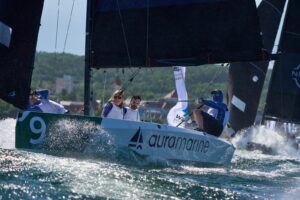
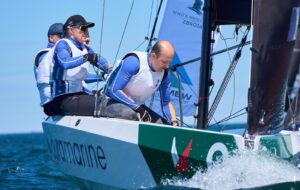
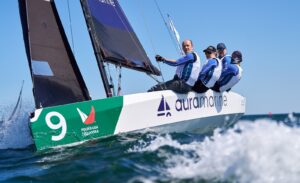
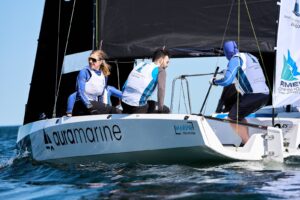
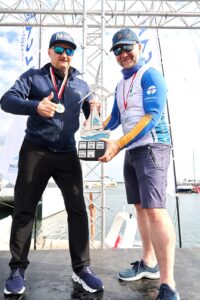
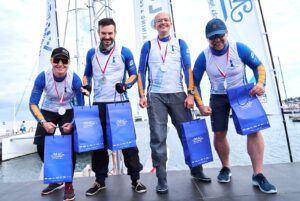
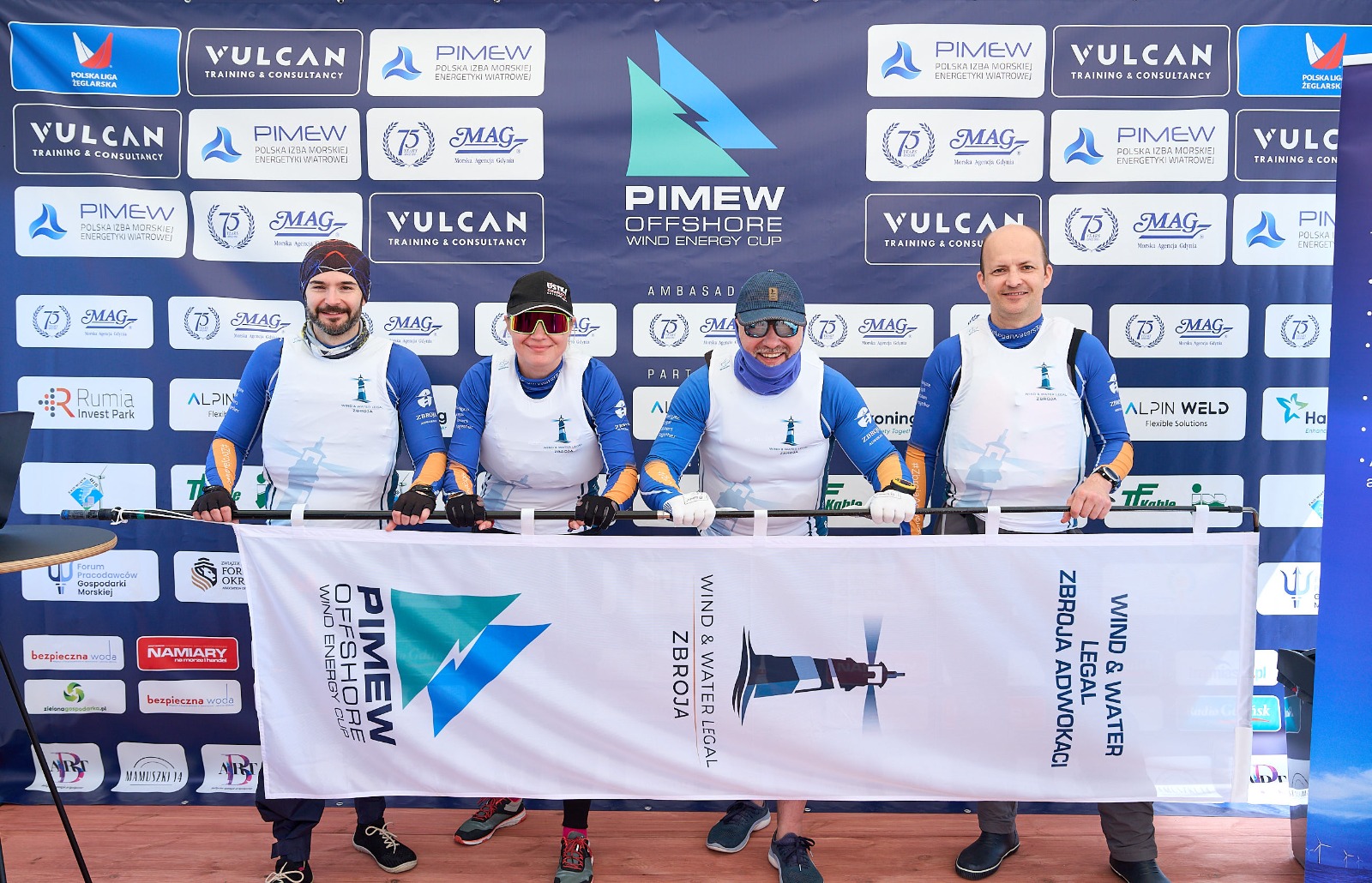
PIMEW Offshore Wind Energy Cup 2026 was memorable not only because the Wind & Water Legal Zbroja crew finished second in the overall standings, but above all because of the atmosphere, excitement and level of sporting competition that accompanied us throughout the weekend. 

It was clear from Monday’s opening ceremony that this would be a truly special edition. Meetings with representatives from across the offshore wind sector, discussions about projects being carried out in the Baltic Sea and the exchange of experience demonstrated just how rapidly Poland’s offshore wind industry is developing. Among the most frequently discussed topics were the creation of a domestic supply chain, the development of installation and service ports, investment in grid infrastructure, and preparations for the next stages of offshore project delivery. 

Moments like these are among the greatest benefits of these regattas. In our day-to-day work, we collaborate on complex projects, often knowing one another only through video conferences or email correspondence. In Sopot, we had the opportunity to meet face to face, talk and get to know better the people working together to build the future of Poland’s offshore wind sector. 

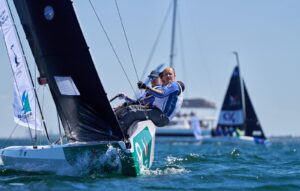
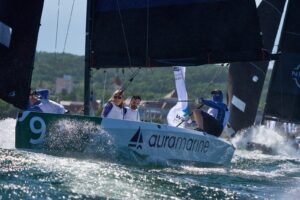
From the beginning, however, it was clear that there would be no room for “leisurely sailing” on the water. Conditions became increasingly demanding with each race. The wind steadily gathered strength, eventually making it impossible to use the gennakers. Even the mainsails had to be reefed, but as it turned out, the smaller sail area was more than enough to get the yachts planing and provide the crews with plenty of excitement. 

Tuesday’s races were a true test of skill, concentration and teamwork. The leading crews were separated by the narrowest of margins, with finishing positions often determined by a single manoeuvre, a sound tactical decision or a swift response to changing conditions. Each race had its own story, and the competitors’ sporting level was truly impressive. 

We will particularly remember the qualifying stage of the regatta. In one of the decisive races, we were leading the fleet when our crew line-up unexpectedly changed, as one of our crew members… decided to go for a swim (that is, of course, a joke – the swim was definitely not intentional). Despite the fierce battle for the final result, true to the principle that “we leave no crew member behind”, we turned back to retrieve our crew member, losing valuable metres and positions in the process. We ultimately managed to finish the race in third place, which was one of the most satisfying moments of the entire regatta and the best possible proof that sporting results are never more important than people. 

Throughout the regatta, the competition remained incredibly close. Every mistake came at a cost, every well-executed manoeuvre provided an advantage, and the crews fought for their positions right up to the very end. This makes it all the more rewarding that, as Wind & Water Legal Zbroja, we were able to maintain our focus, consistently stay among the leading teams and ultimately finish second in the overall standings. 

Congratulations are due to the winning crew from the Sea Agency in Gdynia (Morska Agencja Gdynia), which is celebrating its 75th anniversary this year, as well as to the STBU crew, who rounded out the podium. Our recognition, however, goes to all the participants who took to the starting line and competed in demanding conditions throughout the weekend, demonstrating a high standard of sailing and true sporting spirit. 

The PIMEW Offshore Wind Energy Cup once again reminded us why the offshore wind community is so exceptional. Competition on the water is uncompromising, yet everyone fully understands the importance of collaboration, trust and responsibility for the team. These are values that equally well define our day-to-day work on offshore wind projects. 

We return from Sopot with second place, but above all with the sense that we have formed a truly close-knit crew. Experiences like these stay with us far longer than any position in the final standings. 

This year, Wind & Water Legal were represented by: 


Can anyone become a lawyer? 

Law or Medicine 

When I finished school, those who achieved good grades and saw themselves as more inclined towards the humanities than the sciences often chose to study law. Medicine was another option. So high-achieving students went into law or medicine – unless, of course, they had already developed specific interests and plans or had no opportunity to pursue them in their hometown. There is little point in exploring the issue in too much detail here or discussing the rather controversial division of students with “scientific” and “humanities” minds. Looking back, however, this approach did not lead to much good – either in law or in medicine. 

Does the “I get good grades at school, so I’ll study law” mindset still persist? I think it does. Although each new generation choosing this degree is more aware of a whole range of issues, their knowledge of the profession remains limited, while their first experiences of legal work are often deeply disappointing. 

Who is a lawyer today? 

Almost everything, really. It may be easier to say who they are not: a gatekeeper of knowledge carrying a bulging case file, an unapproachable and infallible authority in a suit. Nor are they simply a clerk dealing with procedures. 

A lawyer running a law firm is first and foremost an entrepreneur. And this is perhaps the greatest surprise for most lawyers who establish their own practice. It turns out that someone with a humanities background needs to get to grips with numbers, while an idealist driven by visions of a just world must come back down to earth and start thinking about marketing. And when that entrepreneur begins to employ people, things become even more interesting. 

 Our value is growth 

There are many young people in our law firm. We try to show them what they won’t see at university (though, of course, we are pleased with the curriculum changes that universities are timidly, if somewhat belatedly, implementing). In every possible way, we try to make students and legal trainees realise that a lawyer is increasingly an interdisciplinary expert who combines traditional legal knowledge with digital, business, and communication skills. 

And in this context, the answer to the question of whether anyone can be a lawyer is: not everyone. And for entirely different reasons than even 10 years ago. 

Those who will thrive in this profession are people whose starting point will be an open approach to the profession, a readiness for change and growth. Because only such an attitude will give them a chance to navigate a world that our clients themselves must keep pace with. 

Ship without a captain – what is the maritime industry working on?

In our article on autonomous systems in yachting – Autonomous systems in yachting: a step towards crewless yachts? – we showed how artificial intelligence is supporting recreational sailing today. Systems like SEA.AI help detect hazards and enhance safety on the water. However, they still play a purely supporting role, with the final decisions resting with the human operator. 

In commercial shipping, on the other hand, the scope of development is far broader. The maritime sector is working intensely on vessels equipped with systems that not only assist the crew but gradually take over operational and navigational functions. 

Built around these advancements is the concept of MASS – Maritime Autonomous Surface Ships. 

Since the subject is too vast to cover in a single article, in the forthcoming instalments of this series we will be taking a close look at the various issues relating to autonomous vessels. Today, however, we will focus on the general legal issues associated with this type of vessel. 

Are there already autonomous ships? 

A good example of the direction in which autonomous shipping is developing today is the Norwegian vessel Yara Birkeland. The vessel was designed as the world’s first fully electric container ship capable of autonomous operation. 

The main aim was to reduce road transport and shift some of the freight to sea. Every day, over a hundred diesel-powered lorries transported goods from Yara’s plants in Porsgrunn to the ports of Brevik and Larvik. Yara Birkeland was intended to gradually replace a significant proportion of these, reducing emissions of CO2 and nitrogen oxides. The project was also designed to reduce noise and dust and improve safety on local roads. 

The vessel itself is powered by an electric drive and utilises systems designed for remote and – ultimately – autonomous operation. This is made possible by the integration of sensors, monitoring and control systems, and technology that enables remote control. 

Despite the Yara Birkeland’s immense technological sophistication, some of its operations are still monitored by operators, meaning it does not yet function as a fully autonomous vessel without human supervision. Even the most advanced vessels still require a human element, and achieving full autonomy at sea is a process that will take many years. And from today’s perspective, it is difficult even to assess whether this is a realistic prospect. 

Where does the problem lie 

The greatest challenges associated with autonomous ships do not relate solely to the AI systems themselves. A far greater problem is posed by maritime law, which has always assumed – and continues to require – the presence of a human on board or within the chain of command and responsibility. 

This applies primarily to: 

  • the COLREG Convention of the Prevention of Collisions at Sea,
  • the UNCLOS Convention,
  • the STCW Convention,
  • and national maritime laws. 

The COLREG rules assume that it is a person who assesses the situation, hears the sound signals, decides on a manoeuvre and bears responsibility for the safety of navigation. 

An autonomous vessel, rather than a human, uses the following: 

  • cameras,
  • radar,
  • sensors,
  • data analysis systems,
  • artificial intelligence algorithms,
  • automated decision-making systems. 

Current regulations do not provide a clear answer to the question of whether an AI system can “keep watch“ or follow “good maritime practice” on its own. At this stage, therefore, it must be assumed that human involvement is necessary. 

Furthermore, at international level, there is still no standardised definition of the “master” (captain) in charge of the vessel. However, two main characteristics can be identified, namely: 

  • physical presence,
  • responsibility for the people on board, the cargo and the vessel itself. 

Another issue concerns obligations relating to assistance at sea. Under UNCLOS, the master of a ship is obliged to aid persons in distress. In the case of autonomous and unmanned vessels, however, the question arises: how would a ship without a crew carry out a rescue operation? 

An AI system can detect danger, send an alarm signal, notify the emergency services or change course. However, it is not capable of physically pulling a person out of the water or providing assistance in the same way as a crew on board. 

At the time the UNCLOS provisions were being drafted between 1973 and 1982, remote control of a seagoing vessel was technologically impossible. For this reason, the term “command” was sufficient to establish that the master and crew must physically be present onboard. 

The most autonomous maritime vessels already operate without the need for a human presence on board. However, as with unmanned aircraft, they are manned by people capable of taking control remotely. UNCLOS itself does not explicitly refer to physical presence of the captain and officers on board. It refers to “command”, which leaves the door open for the existence of a remote operator. 

Such supervision by a seagoing vessel’s operator would have to operate virtually round the clock to ensure constant monitoring of the navigational situation and the ability to react immediately. This model is similar to the way air traffic control towers operate in aviation. 

However, solutions of this kind raise many legal questions. These range from doubts as to which party would be liable for any damage, to the question of whether a remote operator could be regarded as the master. And – importantly – what the consequences of this would be. 

What the IMO is currently working on 

For several years now, the IMO (international Maritime Organization) has been analysing existing international conventions and assessing which provisions require amendment in light of the development of autonomous ships. 

The most important project at present is the MASS Code – a code regulating the operation of autonomous and unmanned ships. Initially, the code is intended to be non-binding, and its publication is expected in the near future. Only once practical experience has been gained will it be transformed into a mandatory international instrument. 

The work focuses primarily on: 

  • maritime safety,
  • rules for conducting MASS trials,
  • cybersecurity,
  • qualifications for remote operators,
  • technical requirements for autonomous vessels,
  • liability rules. 

The IMO’s plan also provides for the creation of a framework for testing and gathering experience, followed by the development of a mandatory code. Under current plans, mandatory regulations could come into force in 2032. 

Summary 

Technologies enabling partially remote and automated shipping already exist today, and the industry is working intensively on their further development. 

The coming years are unlikely to see the introduction of fully unmanned vessels operating without human supervision. A model involving a gradual increase in automation whilst maintaining control by remote operators appears to be a realistic prospect. 

The sea remains an unpredictable environment, and responsibility for the safety of shipping cannot currently be assigned to a system or an algorithm. 

Local content in the wind energy sector – the government’s definition of “domestic content” and its meaning 

Local content is undoubtedly a concept of fundamental importance when it comes to building a strong offshore wind industry in the Baltic Sea. That is why the government’s initiative, “Local Content: for the benefit of Poland”, which aims not only to define the concept itself but also to establish rules for its application, is of paramount importance for the energy transition, infrastructure investment and the entire offshore wind sector.   

We have already written about local content here, among other places: Local Content in offshore wind – challenges in defining the concept 

The definition, measurement methodology and proposed Code of Good Practice presented by the Ministry of State Assets (hereinafter: MSA) could have a real impact on how tenders are prepared, consortia are formed, supply chains are reported on, and bids are evaluated in energy projects. 

From slogan to standard 

For years, “local content” has featured in the Polish debate primarily as an economic demand. The aim was to ensure that as much of major infrastructure investment as possible remained within the country. In the offshore wind energy sector, the topic has been present since work began on The Polish Offshore Act (and thus as early as the Sector Deal stage!). But until now there has been no uniform, operational definition that could be applied by investors, contracting authorities, state-owned companies, suppliers and subcontractors. In short, there was no definition for all participants in the supply chain. 

The MSA’s project, “Local Content: for the benefit of Poland”, has been changing this perspective. The Ministry states that the aim of the programme is to localise supply chains. Particularly in projects carried out by companies in which the State Treasury holds a stake, and to enhance Poland’s strategic autonomy and economic security as a “key player” with a stake in the development of this sector of the economy.   

From a legal perspective, the most important point is that local content is beginning to evolve from a political declaration into a management, procurement and contractual tool. This means that in future investment projects, not only the price, deadline and experience of the contractor, but also the structure of the supply chain, the involvement of domestic entities, local service capacity, industrial expertise in Poland and transparency of reporting may become increasingly important. And all this in accordance with EU law, which guarantees that companies from across the European Union must be treated on equal terms with Polish companies. 

The government’s definition of the domestic component 

According to the approach presented by MSA, the “domestic component” refers to the value of goods or services produced or provided by a domestic entity, taking into account the criteria for classifying that entity as domestic. This definition is to be applied primarily in a pilot scheme for the energy sector, in which contracting authorities, suppliers and sub-suppliers will disclose the structure of the supply chain in forms submitted to the (GUS).   

This is a significant change. Local content is no longer understood solely in terms of the nationality of capital or the place of company registration. The government’s definition seeks to capture the actual economic contribution:   

  • where the business is carried out,
  • where added value is created,
  • where taxes are paid,
  • where employees are employed, and
  • whether the business has a permanent presence on the Polish market. 

This approach may be of particular significance for offshore wind. The supply chain for offshore wind farms is inherently international. Turbines, foundations, cables, installation vessels, power systems, service ports, and design and operational services often involve entities from many different countries. However, this does not mean that domestic participation is impossible. On the contrary – it can occur at many levels: from the production of steel components, through port services, logistics, design, environmental studies, cybersecurity, maintenance, maritime transport, right through to staff training. 

Criteria for determining an entity’s “domestic status” 

The Code of Good Practice, which is no less important than the definition of local content itself, provides for a points-based assessment of a company’s domestic status. The criteria include, amongst other things: 

  • the registered office of the ultimate parent company being in Poland,  
  • the main business activity being carried out within Poland,  
  • Polish tax residency,  
  • the employment of more than 50% of staff who are Polish citizens or residents of Poland and who pay taxes and social security contributions in Poland,  
  • a registered office in Poland, 
  • at least three years of operation,  
  • and the generation of more than 50% of annual turnover in Poland.  

Individual criteria are weighted between 10% and 25%.   

This means that enterprises will need to prepare in advance the documentation confirming their status. Simply being registered with the National Court Register (KRS) may not be sufficient. Tax information, the structure of the group of companies, the place where business is actually conducted, the employment structure, the proportion of turnover generated in Poland, and the method of documenting this information will also be relevant. 

In practice, this may lead to the creation of a new category of tender and contract documentation: 

  • local content declarations,
  • supplier questionnaires, reporting obligations to the contracting authority,
  • subcontracting clauses,
  • supply chain audit mechanisms,
  • obligations to update data in subsequent years of the contract’s implementation. 

A particularly sensitive sector 

In the offshore wind energy sector, the issue of local content is not a new one. The Polish Offshore Act had already introduced a requirement to submit a supply chain plan for materials and services as part of the application process for support and during pre-qualification for auctions, with particular emphasis on the involvement of local entities. There is also a requirement to engage in technical dialogue with potential suppliers and to submit reports on the implementation of the plan. 

The MSA’s new definition could therefore complement the existing system. Until now, supply chain plans have primarily served an informational and stimulatory purpose. Now, local content will, by design, be measured more uniformly, and its level will become a factor in assessing management effectiveness, procurement policy and the investor’s reputation. It may also become a tool for monitoring the involvement of foreign companies in the construction of Poland’s critical infrastructure. 

The scale is considerable. The Polish Wind Energy Association (PSEW) estimates that potential investments could reach as much as PLN 900 billion in offshore wind and PLN 214 billion in onshore wind. This illustrates just how large a proportion of future investment expenditure could be covered by the debate on the domestic supply chain. 

Soft law, but tough consequences 

The definition of local content set out here is not introduced by a law that automatically changes all procurement procedures in Poland. Rather, we are dealing with a soft-law instrument, supported by the State Treasury’s ownership policy, the Code of Good Practice, KPIs for management boards, and reporting mechanisms. 

The Code of Good Practice states that it applies to contracts awarded by companies in which the State Treasury holds a stake, to the extent not covered by the Public Procurement Law. For public contracts covered by the Public Procurement Law, however, the State Procurement Policy for 2026–2029 remains the point of reference.   

This does not, however, mean that the documents issued by the MSA will be irrelevant. In state-owned companies, ownership guidelines, KPIs, internal procurement regulations and the expectations of supervisory boards can have a significant impact on contracting practices. For contractors and subcontractors, this means that local content may become a tangible element of business discussions, pre-qualification, technical dialogues and contract negotiations, ultimately affecting the competitiveness of Polish companies. 

Local content cannot amount to direct discrimination 

The greatest challenge will be to balance local content requirements with the principles of public procurement law, EU law and competition rules. In public procurement, preference cannot simply be given to a contractor solely on the grounds that they are based in Poland. The criteria must be objective, transparent, proportionate and relevant to the subject matter of the contract. 

It is therefore legally safer to formulate requirements based on the project’s actual needs. This includes security of supply, service availability, life-cycle costs, response times, cybersecurity, mitigation of logistical risks, the competence of the local team, the quality of operational support, transport emissions and maintenance capabilities.   

This means that local content should be designed as a set of legitimate procurement tools, rather than as an automatic national preference. Contracting authorities should therefore make use of needs analysis, the division of contracts into sections, quality criteria, requirements regarding continuity of supply, service clauses, and reporting obligations regarding subcontracting, as well as environmental and social criteria related to the subject matter of the contract. 

Significance for investors and contractors  

For offshore wind investors, the government’s definition of local content means that supply chain management must be approached in a more systematic way. It is worth identifying, as early as the project planning stage, those procurement packages where it is realistically possible to engage Polish suppliers. This applies in particular to design, port, logistics, maintenance, environmental, geotechnical, legal, consultancy, training and transport services, as well as certain aspects of manufacturing work. 

For contractors and suppliers, the definition of local content could become a business argument. Companies operating in Poland should prepare a “local content profile”, i.e. a set of data demonstrating their domestic contribution. This may include ownership structure, place of business, Polish tax residence, employment, local production or service facilities, experience in energy projects, the ability to work to offshore standards, and readiness to report. 

For foreign contractors, local content does not have to be a barrier. It can serve as an incentive to establish a stronger presence in Poland through the creation of subsidiaries, service centres and production facilities, partnerships with Polish companies, the transfer of know-how, joint ventures with local suppliers, and training programmes. 

Local content in contracts 

In offshore wind projects, local content will only be meaningful if it is translated into specific contractual mechanisms. In practice, it is worth considering including the following in contracts: 

  • clauses requiring reporting of domestic content at the level of the contractor, subcontractors and further sub-suppliers, 
  • an obligation to notify changes in the supply chain structure, 
  • rules for the qualification of domestic entities according to the adopted methodology, 
  • the contracting authority’s right to audit local content data, 
  • commitments regarding the use of local maintenance facilities, 
  • mechanisms for cooperation with Polish SME sector, universities, research institutes or training centres, 
  • provisions concerning the protection of trade secrets and sensitive data,  
  • rules on liability for false local content declarations.  

Particular care must be taken when processing data relating to employees. The criteria of employing more than 50% of staff who are Polish citizens or residents of Poland and who pay taxes and social security contributions in Poland may require the use of aggregated data, declarations and data minimisation procedures, so as not to create undue risks from a personal data protection perspective. 

Legal risks 

For contracting authorities, the greatest risks relate to an imprecise definition of the criteria for ‘Polishness’, excessive restriction of competition, a lack of connection between the requirement and the subject matter of the contract, disproportionate reporting obligations, and a discrepancy between the declared local content and the actual course of the contract’s performance. 

For contractors, the risk lies in making overly ambitious commitments that cannot be met within the subcontracting structure. In offshore wind projects, where schedules are tight and the availability of components and installation vessels is limited, any commitment regarding domestic participation should be preceded by a realistic market analysis. Excessive promises may lead to contractual disputes, contractual penalties, loss of credibility or problems in subsequent tenders. 

It will also be important to strike a balance between protecting trade secrets and meeting reporting obligations. The supply chain in the offshore wind sector can be multilevel, and data on suppliers, margins, the origin of components or cost structures may be of competitive significance. Therefore, local content documentation should be prepared in advance, rather than only at the stage of an audit or a dispute. 

Is legislation needed 

The fact that the changes are not being introduced by legislation requires separate consideration. The main concerns relate to the effectiveness of the proposed measures. However, it seems that the absence of a separate local content act does not necessarily undermine the new approach. In many areas, internal procurement policies, good practices, dialogue with the market, KPIs for management boards, reporting pressure and the professionalisation of procurement may be of greater significance. At the same time, the absence of a statutory regime means that each contracting authority should very carefully select the legal instruments appropriate to the type of procedure: different rules apply to public procurement, sectoral procurement, private procurement, and contracts of companies with State Treasury shareholding outside the Public Procurement Law. 

That is why, when advising investors, contractors and suppliers in the offshore wind sector, rather than asking whether local content “applies”, what we should do is to analyse how to integrate it correctly, safely and effectively into the investment process, turning it into an asset rather than an obstacle. 

What needs to be done now 

Entities operating in the offshore wind sector should start by auditing their own supply chain. It is worth checking which parts of the project can be carried out by domestic entities, what data is available, what the subcontracting structure looks like, and whether the contracts allow for the collection of the information needed for reporting. 

Next, an internal, consistent local content procedure must be established: who collects the data, how it is verified, who makes the declarations, which documents are archived, and how trade secrets are protected. In the case of larger corporate groups, it may also be necessary to agree on a uniform reporting methodology across the entire group. 

Finally, it is worth communicating your capabilities regarding local content as early as the technical dialogue or tender stage. In the coming years, suppliers who not only possess technical expertise but can also demonstrate their contribution to the Polish economy may gain a competitive edge.  

Summary 

It appears that the government’s definition of local content is not merely an economic policy slogan. It signals a new standard for strategic investments in energy, infrastructure and industry. For offshore wind, this could be one of the key elements of the next stage of market development. 

However, the most important thing will be for local content to be implemented in accordance with the law, transparently and proportionately. If well-designed, it can support Polish companies, increase the resilience of supply chains and strengthen energy security. If poorly designed, it can lead to disputes, allegations of discrimination and inefficiency in procurement. 

For investors, contracting authorities and suppliers, this means one thing: local content is becoming an element that must be managed just as professionally as the schedule, budget, regulatory risks and contract documentation.

12th Maritime and Herring Congress 2026 – more than an industry event

This year’s 12th International Maritime Congress in Szczecin, of which we were a partner, demonstrated that the maritime economy is no longer solely an industry-specific issue. Today, it encompasses matters of national security, energy, critical infrastructure, port investments, transport, the offshore sector and the law, which must keep pace with the rate of change. 

The Congress brought together nearly 700 representatives from the maritime business sector, public administration, the world of politics, academia and industry experts. Szczecin once again became the venue for a substantive debate on the role Poland wishes to play in the Baltic Sea and within the European maritime economy. 

Guests at the event included, amongst others, Deputy Prime Minister Radosław Sikorski and Deputy Minister for Infrastructure Arkadiusz Marchewka. Discussions centred on international security, energy, port development, the competitiveness of shipping companies, and investments that are expected to have a direct impact on the standing of Polish ports. 

The topic of infrastructure featured particularly prominently. Announcements regarding the widening of the fairway near Police, the construction of an approach channel to Świnoujście and further improvements to port accessibility demonstrate that the development of the maritime economy requires concrete investment decisions. Ports do not operate in a vacuum. Their competitiveness depends on the depth of fairways, efficient logistics, the safety of navigation and the ability to handle ever-larger vessels. 

No less important was the issue of the return of the Polish flag. This is a topic that has recurred for years in discussions about shipping and the competitiveness of Polish shipowners. The Congress demonstrated that a political declaration alone is not enough. Legal, tax and organisational solutions are needed to create realistic conditions for registering ships under the Polish flag. The law should act as a tool for development here, rather than an administrative barrier. 

This is precisely why legislation in the maritime sector deserves particular attention today. The maritime sector is changing faster than many traditional regulations. Offshore operations, critical infrastructure, ports, supply chains, energy security and environmental protection require regulations that are predictable, consistent and practical. Good legislation should not merely describe reality; it should help to organise it. 

Local content is also of great importance in offshore projects. The development of offshore wind energy in the Baltic Sea should create opportunities not only for the largest players, but also for local businesses, ports, shipyards, service providers, universities and specialists from the region. If Poland wishes to build lasting value from offshore projects, it must ensure that as much expertise, contract work and know-how as possible remains within the country, particularly in regions directly linked to the sea. 

It is also a legal and contractual challenge. Local content cannot remain merely a slogan. It requires the careful design of tenders, contracts, requirements for the participation of local suppliers, mechanisms for cooperation with Polish companies, and stable rules for investors. Only then will offshore become a driving force for the entire economic ecosystem, rather than simply another market segment operated outside the local infrastructure. 

We also wrote about local content recently in the article: Local content in the wind energy sector – the government’s definition of the ‘domestic component’ and its significance 

The Congress also pointed out that maritime security today has a very broad scope. It encompasses not only shipping and ports, but also LNG terminals, subsea cables, pipelines, wind farms, ICT systems and energy infrastructure. All of this constitutes critical infrastructure that requires protection, investment and clear rules on liability. 

The 12th International Maritime Congress demonstrated that Szczecin and Western Pomerania play a significant role in this debate. Today, the region brings together many key issues for the future of the maritime economy: ports, access to the sea, infrastructure investment, offshore activities, energy, logistics and security. It is a natural forum for discussing how to build Poland’s strong position in the Baltic Sea. 

The conclusions following the Congress are clear: the maritime economy needs investment, but it equally needs sound legislation. Without effective legislation, it is difficult to talk about the return to the Polish flag, the effective development of the offshore sector, the protection of critical infrastructure or the competitiveness of ports. The sea is becoming one of the most important areas of economic policy and national security. 

The week culminated in a meeting of representatives from the maritime sector – Herring  2026. Over 100 companies gathered at the Enea Arena, including entities from outside the region that work with the sector on a daily basis. The Baltic Laurel was awarded to Arkadiusz Marchewka, whilst the Amber Laurel went to the Maritime University. Congratulations to the winners and see you next year! 

Photos from the 12th Maritime Congress: 

Photos from Herring 2026:

New AML obligations – will your company be regulated entity? 

In our previous article – Changes to the AML Package – we explained why the new AML/CFT package will be significant for the yachting industry and why the 7.5 million EUR threshold does not cover the whole issue. 

Now it’s time for a more practical question: will your company become an obliged entity? 

This is important because the answer will determine whether a broker, dealer or other market participant will have to implement AML procedures, a risk assessment, a KYC/UBO checklist, a sanctions screening system and rules for reporting suspicious transactions. 

This is not just a single regulation. 

The new regulations do not result from a single piece of legislation. They form part of a broader AML/CFT package, which includes, among others: 

  • Regulation AMLR 2024/1624,
  • Directive AMLD6 2024/1640,
  • the Regulations establishing the AMLA, the new EU anti-money laundering authority,
  • the Regulation concerning information accompanying transfers of funds and certain crypto-assets. 

From the perspective of yacht brokers and dealers, however, the AMLR will be of paramount importance, as it sets out the list of obliged entities, due diligence rules, internal obligations and provisions relating to high-value goods. The AMLR itself states that it forms part of a broader package designed to strengthen the EU’s anti-money laundering and counter-terrorist financing framework. 

The AMLR will apply from 10 July 2027. Of course, there are also exceptions to this rule. 

Who is an obliged entity? 

Put simply: 

An obliged entity is an entity on which AML regulations impose an obligation to carry out customer due diligence, assess risk, document transactions and report suspicions of money laundering or terrorist financing. 

This is not merely a formal label. It represents a change in the way a company operates. 

The obliged entity must know: 

  • who the customer is,
  • who the ultimate beneficial owner (UBO) is,
  • what is the purpose of the transaction,
  • where the funds come from,
  • whether the customer or the UBO is a PEP (politically exposed person),
  • whether there are any sanctions risks,
  • whether the transaction appears unusual. 

In the yachting industry, this does not mean that every broker or yacht seller automatically becomes an obliged entity. 

The AMLR refers to persons engaged in trading in high-value goods, where such trading constitutes their usual or main professional activity. 

Does your company fall under AML – a quick test 

Instead of simply asking, “Does the yacht cost more than 7,5 million EUR?”, it is better to ask four questions. 

 1. Are you acting in a professional capacity? 

A private individual selling their own yacht does not automatically become a taxable person as a result. 

The situation is different for a dealer, a broker or a company that is professionally involved in the trade in yachts. 

 2. Are you involved in the trade in high-value goods? 

For the yachting industry, vessels are, of course, of particular importance. 

Under the AMLR, a vessel is considered a high-value good if its price exceeds 7,5 million EUR. 

This means that the greatest risk of falling under the AML regime applies to entities involved in the sale of superyachts. 

 3. Is this your usual or main business activity? 

A one-off contact with a client interested in a large yacht is quite different from regularly handling superyacht transactions. 

In practice, you need to look at the business model: 

  • whether the company regularly offers superyachts,
  • whether it advertises itself as operating in this segment,
  • whether such transactions form a significant part of its business,
  • whether the company wishes to enter this segment on a permanent basis.

 4. What is your actual role? 

This is particularly important when it comes to brokers. 

The situation is different for someone who merely passes on a contact, compared to a broker who conducts negotiations, coordinates documentation, organises the closing and acts as the main point of contact for the client. 

The more a broker is actually involved in managing the superyacht sales process, the harder it will be to claim that their role is purely supportive. 

Dealer versus broker – why this distinction matters 

With a dealer, the matter is usually simpler. If they sell top-of-the-range vessels as a profession, their business may fall squarely within the category of trading in high-value goods. 

With a broker, the analysis is more nuanced. 

A broker often does not purchase a yacht for their own account and does not resell it. Formally, they may “merely” act as an intermediary. But in practice, it is often the broker who manages the entire transaction process. 

That is why it is not enough to look at the title of the contract. One must look at the broker’s actual role in the transaction. 

The 7.5 million EUR threshold – what it refers to 

The 7.5 million EUR threshold is very important, but it should not be interpreted too simplistically. 

Firstly, it helps to determine whether a vessel is a high-value asset. 

Secondly, it is relevant to a specific reporting obligation. The AMLR requires the reporting of sales of vessels for a price of at least 7.5 million EUR, provided the acquisition is for non-commercial purposes. In Poland, such transactions must be reported to the General Inspector of Financial Information. 

Thirdly, this threshold does not represent the full scope of AML. 

If you are an obliged entity, you must also apply due diligence measures in other situations, for example when establishing a business relationship, in the case of certain occasional transactions, and whenever there is a suspicion of money laundering or terrorist financing. 

Therefore, the statement: 

“AML applies only to yachts worth over EUR 7.5 million” is an oversimplification. 

To be more precise: 

7.5 million EUR is the threshold for classifying a vessel as a high-value item. This threshold triggers a reporting obligation and confirms the status of an obliged entity. 

Commercial or non-commercial purpose – what to watch out for 

The AMLR applies to purchases for non-commercial purposes. 

If a yacht is purchased for genuine professional charter, tourism or other profit-making activities, the reporting obligation may not apply. 

But you need to be careful. 

The mere fact that a company is purchasing a yacht does not in itself imply a commercial purpose. The AMLR states that sales for private and non-commercial use may also involve legal entities and legal arrangements, particularly where these have been set up to manage the beneficial owner’s assets. 

Example: 

An SPV purchases a yacht but does not actually operate a charter business. The yacht is intended for the private use of the owner’s family. In such a situation, the corporate form alone does not necessarily mean that the purpose is commercial. 

What an obliged entity must do – what needs to be prepared 

If a company falls under the regime for obliged entities, it is not simply a matter of submitting a single notification to the GIIF. 

It is about an entire system. 

In practice, the following must be prepared: 

  • a business risk assessment,
  • an AML procedure,
  • a KYC/UBO checklist,
  • rules for sanctions and PEP screening,
  • rules for documenting the source of funds,
  • a person responsible for AML,
  • training for those involved in transactions. 

The most important question in practice will be simple: 

Who is buying? 

Who is really behind the buyer? 

Where does the money come from? 

For what purpose? 

Does the transaction make sense? 

Is there a sanctions or political risk? 

If a client refuses to disclose the ownership structure, the beneficial owner or the source of funds, the problem is no longer merely organisational. It may mean that the transaction has to be halted or that a report to the GIIF needs to be considered. 

Why banks will anyway keep asking – what to prepare for 

Even if a broker is unsure of their status, the transaction will usually go through the bank. 

And as credit institutions, banks are subject to the AML regime. Furthermore, the AMLR imposes reporting obligations on credit and financial institutions providing services relating to the purchase or transfer of ownership of certain high-value goods. 

In practice: the bank may ask about: 

  • bill of sale,
  • the source of funds,
  • the buyer’s structure,
  • the beneficial owner,
  • the purpose of the purchase,
  • the country of registration of the yacht,
  • sanctions and PEP status. 

A professional broker should prepare the client for these questions in advance, rather than only once the transfer has been held up. 

What to do right now – how to prepare 

Companies operating in, or planning to enter, the superyacht sector should start by asking themselves one question: 

Could my business model mean I’m classified as an obliged entity? 

It’s then worth preparing a brief risk analysis, an AML procedure, a checklist of documents and guidelines for communicating with clients. 

The best AML procedure is not the longest document. It is the one that the team can actually apply during a transaction. 

Summary 

The new AML/CFT package does not mean that every yacht broker will automatically become an obliged entity. 

Nor does it mean that the issue applies exclusively to yachts valued at over 7.5 million EUR. 

Ask yourself these three questions: 

  1. Do you trade in yachts on a professional basis
  2. Do you engage in, or plan to engage in, the trade of high-value goods?
  3. Is this your usual or main business activity? 

After 10 July 2027, professionally handling yacht transactions in the high-end market segment will require not only knowledge of yachts and clients, but also the ability to answer questions such as who is buying, for whom, with what funds and for what purpose.