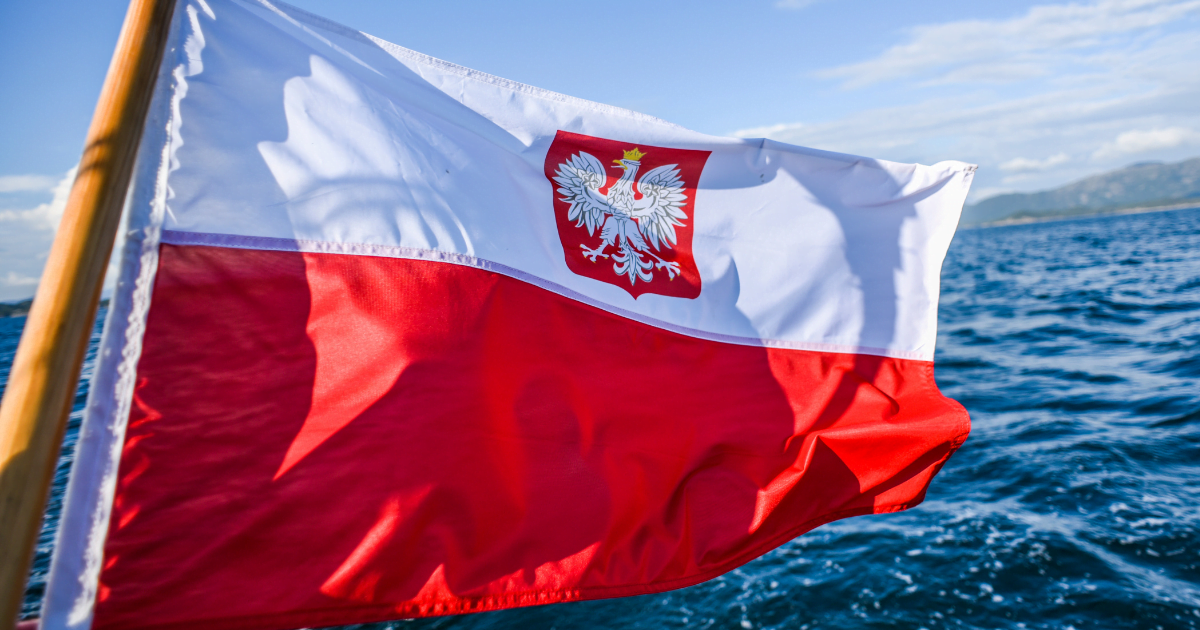
Since April 2020 the Polish flag has become more and more popular with the foreign owners or operators of yachts and other vessels up to 24 m in length.
Low costs and lack of additional inspections for yachts with non-commercial use are interesting benefits for foreign users.
OBLIGATION TO REGISTER YACHTS
Under Polish law, yachts (both offshore and inland) with a length of more than 7,5 m or motor-driven boats with an engine power of more than 15 kW not exceeding 24 m (or vessels used for sailing outside the territory of the Republic of Poland) are subject to registration.
However, the following will not be subject to registration:
(1) vessels exclusively intended for regattas and sports competitions, having a rating class and a valid certificate issued by a Polish sporting association or a competent body in the flag state of the yacht, as well as rowing racing boats;
(2) vessels propelled exclusively by human power;
(3) surfboards, windsurf boards, or other similar craft.
The rule is that the registration is obligatory for a ship that is Polish property, that is to say, a ship (by Polish law a yacht is also a ship) that:
- is at least half-owned by a legal person established in Poland or a Polish national residing in Poland, if the operator of that vessel has their domicile or principal or branch establishment in Poland and the ship, at the request of all the joint owners, has been entered in the permanent registry ledger of the Polish registry of ships;
- is owned by a corporate entity established abroad in which a legal person established in Poland or a Polish national residing in Poland holds participation if the operator of that ship is domiciled or has his principal or branch established in Poland and the ship, at the request of the owner, has been entered in the permanent registry ledger of the Polish registry of ships;
A ship owned by a citizen of an EU Member State or a legal person established in an EU Member State may also be entered in the Polish registry, with the reservation that the following ships are also considered to be such ships:
- a ship that is at least half-owned by a legal person established in an EU Member State or an EU Member State national, if the operator of that ship has their domicile or principal or branch establishment in an EU Member State and the ship, at the request of all the joint owners, has been entered in the permanent registry ledger of the Polish registry of ships;
- a ship that is owned by a corporate entity established abroad in which a legal person established in an EU Member State or an EU Member State national holds participation if the operator of that ship is domiciled or has his principal or branch establishment in an EU Member State and the ship, at the request of the owner, has been entered in the permanent registry ledger of the Polish registry of ships.
REGISTER AUTHORITIES
Polish law establishes two types of registration bodies authorities.
They are:
1) the starost (or president of the cities)
2) the relevant Polish sports association (e.g. The Polish Yachting Association).
This means that a yacht used for sports or leisure purposes not exceeding 24 meters in length will be subject to registration with a sports association or a starost office.
This will also be a particular facilitation for foreign vessel operators or owners who have been allowed to register their craft under the Polish flag under the new law.
It is worth adding that a yacht exceeding 24 m in length, or one whose owner wants to use to establish a mortgage, will still be subject to registration with an admiralty court.
REGISTRATION FEES AND DEADLINES
As of 1 August 2020, a new fee tariff for administrative procedures before yacht registration authorities will apply.
According to the Act on the registration of yachts and other vessels up to 24 m in length and its implementing acts, the fee for:
1) the registration and issue of the registration document,
2) an amendment to the registered data and the issue of the registration document,
3) the issue of a registration document duplicate
will be PLN 80 (approx. EUR 18).
4) the issue of a certified copy of or extract from the yachts registry will be PLN 15 (approx. EUR 3.36).
The registration authority shall record the vessel in the registry or decide not to register the vessel within 30 days. This period will run from the date of the submission of the complete application for registration.
Presently, anyone intending to register a yacht under the Polish flag has full discretion in choosing the registration authority. From 1 August 2020, a yacht can be registered with any county office or relevant sports association, with all the data finally ending up in a single registry.
However, the freedom to choose a registration authority is an important facilitation for owners and operators wishing to register their vessels under the Polish flag.
MAILING ADDRESS IN POLAND
The new law certainly provides good perspectives for yacht owners and operators from both Poland and the EU.
It is therefore somewhat surprising that among the formal requirements to be met by applicants, the legislator should include a requirement for a mailing address in Poland.
The reason for this condition is not fully intelligible, since having to establish an address for service in Poland is bound to cause an unnecessary problem for foreign owners and operators.
One might expect the legislator to have used a more logical solution to this matter when constructing an Act of such significance to yachting and designed to strengthen the Polish flag.
RADIO LICENCES
It is worth reiterating here that operating a yacht under the Polish flag requires a license to operate radio equipment on that vessel. Consequently, the vessel’s owner or operator must apply to the Polish Office of Electronic Communications for a radio license.
Together with the radio license, the Office of Electronic Communications issues the vessel with a call sign and an MMSI (marine vessels) or ATIS (inland vessels) number required by international law for the safety of navigation.
When applying for a radio license, the natural person who owns the vessel is obliged to submit to the Office of Electronic Communications the relevant documents confirming his or her qualifications to operate the radio equipment on board the yacht that the authorization procedure applies to.
In the case of an applicant who is not a Polish national, the Office of Electronic Communications will only recognize qualifications awarded by the Royal Yachting Association, a British organization providing sailing training. The body issues competency certificates in English, which are among the most globally recognized.
The obligation to prove one’s qualifications does not apply to a legal person who owns the vessel and who is applying for a radio license for it, as it is believed that such a legal person shall not at the same time be the skipper/master of the vessel, as this post must be held by a natural person.
Until now, the registry accepted call signs awarded by the Office of Electronic Communications. However, such call signs could only be applied if the vessel was entered into the Polish registry.
Consequently, the owner or operator was forced to register their vessel without a call sign and then obtain the call sign from the Office of Electronic Communications. After these operations, the entry in the Polish registry of yachts could be supplemented with the newly awarded call sign.
The current Act on the Registration of Yachts and Other Vessels up to 24 Meters in Length and its implementing acts establish a new method of cooperation between the registry of yachts and the Office of Electronic Communications, which should facilitate the handling of formalities.
As a result of these changes, when a radio license is issued for the use of radio equipment in the maritime and inland radio communication service, and in the event of an amendment to or revocation or expiry of that license, the Office of Electronic Communications will promptly enter such details in the new registry (within a maximum of 24 h).
The registry entry contains the following details:
- the call sign or the marine MMSI number;
- the term of validity or the date of revocation or expiry of the radio license;
- the type of equipment.
This means that the Office of Electronic Communications will remain in constant cooperation with the new national registry and be able to enter its data using ICT systems.
The owner of the vessel having been awarded their radio license will not have to worry about the status of their entry in the registry of yachts, as it will be automatically updated with the new details.
EMERGENCY RADIO BEACONS
Given existing EU legislation and the widely-defined safety of navigation, one’s EPIRB beacon reported to the Office of Electronic Communications must be registered with the Civil Aviation Authority which, similarly to the Office of Electronic Communications, is expected to maintain permanent cooperation with the new registry and is obliged to promptly enter in the registry the following details:
- information on which action has been performed: an entry in the records, an amendment to an entry, or removal of an entry from the records;
- the date of the entry in the records, amendment of an entry, or removal of an entry from the records;
- the identification code of the emergency beacon.
The above are just some comments on the new rules.
BENEFITS OF YACHT REGISTRATION IN POLAND
We could now try to present some pure benefits of yacht registration in Poland:
- registration of yacht in the Polish register is indefinite;
- the applicant can be not only Pole but also an EU citizen;
- the registration process is relatively quick;
- one-time payment at no additional cost (for recreational yachts);
- yachts registered under the Polish flag are widely accepted and recognized around the world;
- registration of yachts up to 15m runs smoothly, the owner does not need to perform additional inspections and safety inspections – registration of yachts of such dimensions is most beneficial for foreigners in Poland;
- registration of commercial yachts is also possible – however, as in the case of yachts over 15m, the owner will have to perform mandatory periodic inspections and safety inspections, which will incur additional costs, such as payment of all costs associated with the travel of inspectors from the Maritime Office to the designated location
SUMMARY
We may already summarize, that the Polish flag has been still attractive to EU yacht owners, especially to yachts under 15 m.
In fact, if your vessel is below 15 m and you use it recreationally, the polish flag is probably the best option for you.
by Jakub Rodziewicz and Patryk Zbroja