It is two in the morning. You are sailing in the Mediterranean alone or with a small group. The radar is clear. AIS shows no vessels nearby.
Then, suddenly, an alert appears on the screen: a small object 180 meters off the bow.
The thermal camera shows a drifting dinghy. It is empty, and you can breathe a sigh of relief.
This story is fictional, but it could happen in real life. Meanwhile, this is exactly how artificial intelligence-based systems work, and they are increasingly finding their way onto yachts.
In today’s yachting, artificial intelligence is increasingly helping people at sea. However, these systems still only perform a supporting role. They do not take control but warn the crew of an impending danger.
Yacht owners value the ability to sail the vessel themselves, but they also appreciate an extra “eye” that improves safety and comfort. This makes it easier to spot dangers that cannot be seen by ordinary radar or AIS systems, let alone the human eye.
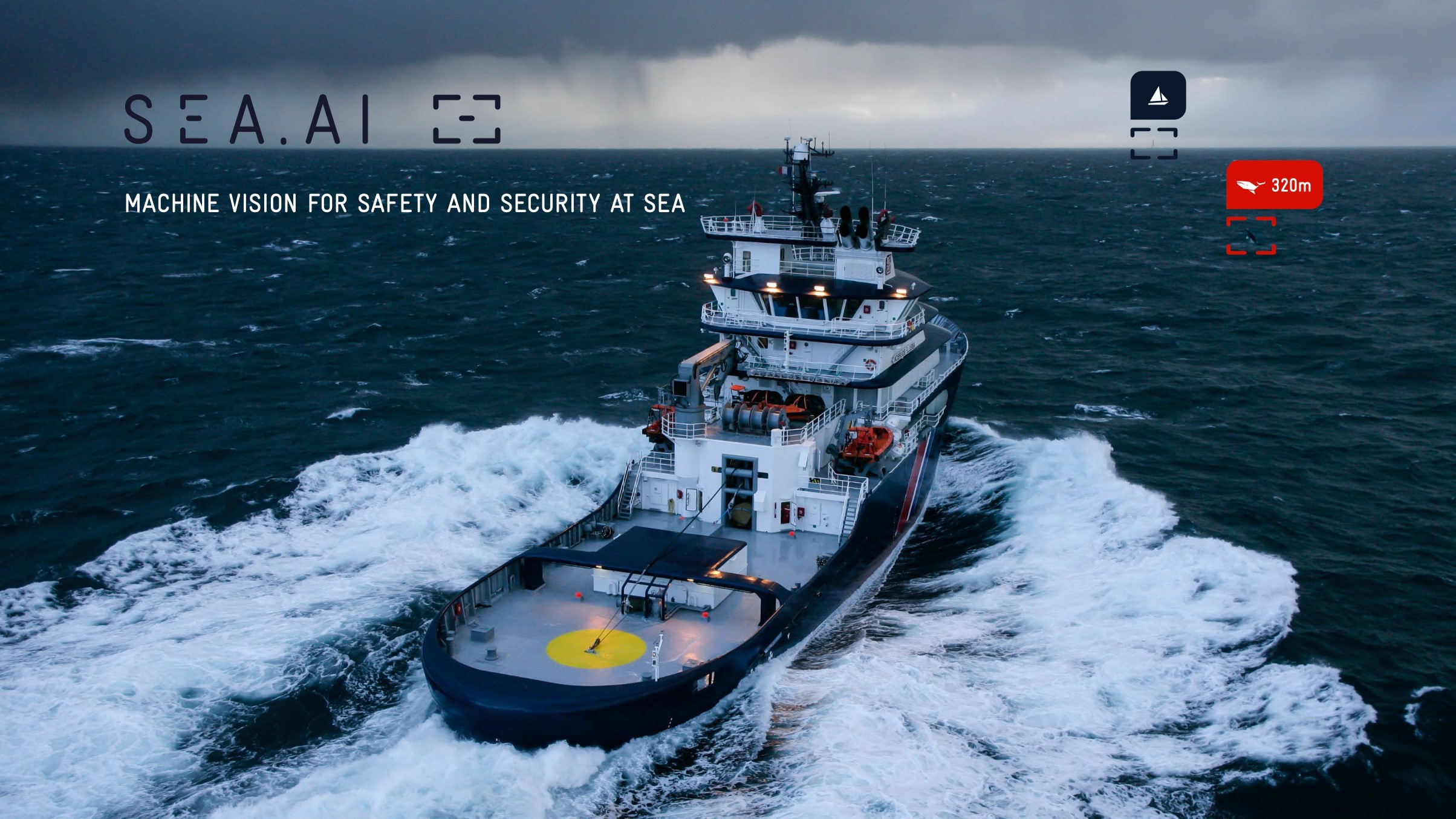
In cooperation with SEA.AI, one of the leaders in computer vision on the water, we show how those support systems work and what legal challenges they create.
How the system works
SEA.AI is an advanced system based on optical and thermal cameras combined with artificial intelligence algorithms. The cameras monitor the surroundings in real time – they also operate in low-light conditions, at night in the most difficult weather conditions.
The system detects and recognises objects on the water surface, such as:
- drifting containers and rubbish,
- kayaks, jet skis, dinghies and boats without AIS,
- buoys, pieces of wood, pieces of ice,
- whales and orcas,
- people overboard,
- sea mines.
SEA.AI complements radar and AIS, filling in their gaps. Radar often misses small objects, especially in high waves, rain, interference or at a bad angle. In addition, it has blind spots close to the yacht, and its effectiveness depends on the operator’s experience.
In recreational yachting, the system does not replace the captain. It does not take over the helm or manoeuvres – it remains a tool that supports the crew. It acts as an extra pair of eyes that constantly monitors the surroundings and warns of potential hazards.
The system also offers practical functions to support observation. For example, it can automatically keep a selected object in the centre of the image (such as a person overboard) and, when sailing, automatically adjusts the camera towards the bow, the most important part of the field of view.
The system analyses images from AI-supported optical and thermal cameras, generates acoustic alarms for the crew, and displays detected objects on navigation maps, phones, tablets, and computers, which significantly increases the crew’s situational awareness and translates into high effectiveness in detecting objects around the vessel.
Since 2018, SEA.AI has installed over 1,200 systems and collected a database of over 24 million tagged objects. As a result, their algorithms are constantly learning and becoming more accurate.
It is also worth noting that SEA.AI is used, for example, on IMOCA class yachts in the Vendée Globe race. More than half of the fleet used it as a ‘second pair of eyes’ during their solo circumnavigation of the globe, detecting drifting objects invisible to radar or AIS.
Function of systems in yachting
With luxury yachts, often worth several million euros, even the smallest collision or contact with an object can cause serious problems. It is not just a matter of human safety – it is also about the aesthetics and value of the vessel. A small scratch, paint damage or contact with a buoy, dinghy or even driftwood can ruin the perfect appearance of the hull.
Repairing such damage can be costly. Systems such as SEA.AI help to avoid such ‘cosmetic’ incidents. Early detection of a small object (even up to several hundred metres away) gives time for a calm manoeuvre – without panic, without the risk of scratches or abrasions.
It not only protects against serious collisions, but also minor contacts.
Legal liability
Imagine a collision in the harbour. The system sounds the alarm, but the captain continues sailing.
The decision is theirs. He will be held responsible if he ignores the alarm and even the slightest collision occurs.
A yacht equipped with support systems is still operated by humans. In the event of a collision involving the yacht, liability usually begins with the operator (the owner of the vessel). He is responsible for ensuring that the yacht has functioning equipment and that the crew knows how to use it.
So, who is responsible?
- the captain – makes the decisions.
- the crew – carry out the captain’s orders.
- the operator – should ultimately have the appropriate insurance.
If the AI system fails to detect an object due to an error in the algorithm, the manufacturer will still not be held liable. All developers of such solutions emphasise that the systems are designed to assist, not replace.
Liability could fall on the manufacturer of monitoring solutions only if a false alarm led to damage being caused. Is this possible in practice? Yes. But is such a scenario likely to occur? No.
In practice, manufacturers are constantly developing their systems, so it is important to ensure that they are always up to date and correctly installed. This is not only a matter of responsibility, but also of cyber security.
Complications with fully autonomous units
Imagine a yacht sailing at night, without a captain or crew – the system makes all the decisions itself. When it approaches a drifting container, it decides whether to turn, accelerate or avoid the obstacle. Sounds futuristic? This is the fourth level of autonomy according to the International Maritime Organisation (IMO) – full autonomy, where the system operates independently.
Degree One – a vessel with automated processes and decision support
- There are always sailors on board who operate and monitor the systems.
- Some operations can be automated and sometimes run without supervision, but the crew is ready to take the helm at any time.
Degree Two – remotely controlled ship with sailors on board
- The yacht is controlled from another location, but there are sailors on board who can take control and operate the systems.
Degree Three – remotely controlled ship without sailors on board
- The yacht is remotely controlled from another location.
- There are no sailors on board.
Degree Four – fully autonomous ship
- The yacht’s operating system makes decisions and determines actions independently.
If yachts became completely autonomous – with no crew on board and a system that makes decisions independently – the issue of legal liability would become extremely complicated.
International conventions such as COLREG assume that there is a captain or crew on board who responds to threats. In the case of full autonomy, there is no clearly defined person responsible for the ship, which makes it difficult to assign blame in the event of an accident.
In practice, responsibility could lie with many entities: the operator, the AI system manufacturer, the software developer, the sensor supplier, or even the remote-control centre operator.
In yachting, full autonomy is still a dream of the future. Imagine a yacht sailing alone across the ocean, deciding on every manoeuvre, avoiding drifting containers and buoys without a captain on board. It sounds fascinating, but in legal practice it is a maze – maritime law still assumes the presence of a person who makes decisions and is responsible for the vessel.
In fact, it is not just about law and safety. Yachting is a pleasure. Everyone wants to feel the wind on their face and steer their own yacht sometimes – after all, that is what it is for. Assistance systems such as SEA.AI are the perfect compromise: they increase safety, warn of dangers, but do not take away the joy of steering independently. Full autonomy may come one day, but today, what matters most in yachting is the pleasure of being at sea.
Summary
Fully autonomous yachts are still a long way off, not only because of technology, but also because of the law. The sea is unpredictable, and even the most accurate algorithms can make mistakes. That is why the law requires someone to be clearly responsible for decisions – a specific person, not a system.
Most owners therefore prefer to remain the captain of their own yacht. That is why assistance systems such as SEA.AI are the ideal compromise: they increase safety and warn of dangers, but do not take away the pleasure of steering.
This is not a revolution, but a sensible step forward. The sea is too unpredictable to leave everything to a machine – at least for now. After all, sailing is not only about reaching your destination, but also about the joy of steering your own yacht.
This article was created in collaboration with SEA.AI, a company that develops artificial intelligence systems supporting safety and navigation at sea. The knowledge and experience of the SEA.AI team in the field of technologies used on autonomous yachts helped to present current solutions and directions for the development of artificial intelligence in yachting.
Consultation: Agata Widuto