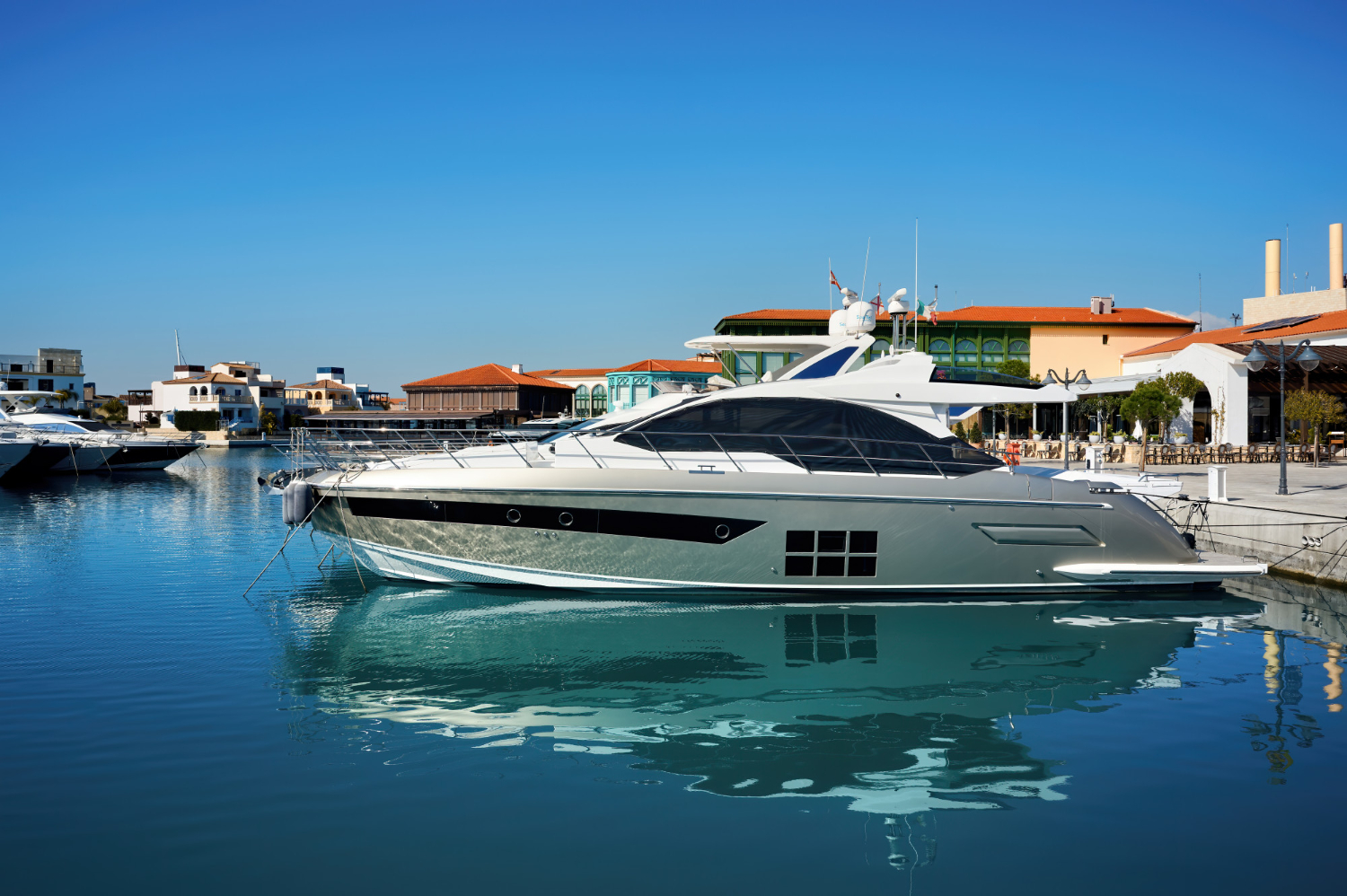
Taxation of international cruises in yacht charter and passenger transport 

In our previous article – Yacht cruise: tourist service, passenger transport or hire of a means of transport? – we analysed when a yacht cruise may be treated as a passenger transport service, when it may be treated as the hire (charter) of a means of transport, and when it may qualify as a tourist service. We also emphasised that the correct classification of the service is important not only from the perspective of regulatory obligations, but also for VAT settlements. 

In practice, however, classifying the service is only the first step. It is equally important to determine the place of supply and the correct VAT rate. This becomes particularly important in the case of international cruises, where the same service may be taxed under completely different rules, depending on its nature. 

Determining the place of taxation is what most often creates problems when organising international cruises. This applies in particular where the cruise: 

  • starts in Poland and ends in another EU member state,
  • starts in another EU member state and ends outside the EU,
  • starts and ends outside the EU. 

Problems also arise because the rules for determining the place of supply are completely different for: 

  • passenger transport services,
  • short-term hire of means of transport,
  • tourist services. 

In this article, we focus on the VAT rules for passenger transport services and the hire (charter) of yachts. Issues relating to tourist services, including the application of the VAT margin scheme, will be discussed in more detail in the next part. 

Passenger transport services 

Where a cruise is treated as a passenger transport service, the place of supply is the place where the transport takes place, taking into account the distances covered. 

This means that a passenger transport service may be subject to taxation in more than one country if the route passes through the territories of several countries.  

Cruises operated exclusively in Poland 

Where passenger transport takes place exclusively in Poland, the reduced VAT rate of 8% will apply. 

This applies, for example, to cruises starting and ending in Polish ports, where the route runs entirely through Polish territorial waters. 

Cruises between European Union member states 

Cruises operated between EU Member States are considerably more complicated. 

If the transport starts in one member state and ends in another, the place of supply remains the place where the transport is actually carried out, having regard to the distances covered. 

This means that the same service may be subject to taxation in several countries at the same time. This may lead not only to the need to register for VAT in different countries, but also to the need to determine what part of the route passed through the territory of each of them. 

Similar problems may arise where the cruise started and ended in Poland, but part of its route passed through the territorial waters of another country. In such a situation, only the part of the service performed in Poland is subject to taxation in Poland. 

At the same time, it may be necessary to determine: 

  • which section of the route passed through the territory of another country,
  • which part of the route took place in the territorial waters of individual countries,
  • which part fell within international waters. 

International passenger transport services outside the EU 

Separate rules apply to international passenger transport. 

If the transport starts in Poland and ends outside the European Union, or starts outside the European Union and ends in Poland, the 0% VAT rate may apply. 

This is conditional on holding documents confirming the international nature of the transport, such as named tickets issued for a specific transport route. 

If the transport starts and ends outside Poland, the service is not subject to taxation in Poland. In that case, it is necessary to determine the tax rules applicable in the countries in which the transport is carried out. 

This position was confirmed, among others, by the Director of the National Revenue Information Service in the individual tax ruling of 20 December 2024 (ref. no. 0114-KDIP1-2.4012.466.2024.2.RST). 

Yacht hire and charter 

In the case of yacht hire or charter, determining the place of supply is particularly important. Only once this has been established is it possible to determine whether the service is subject to taxation in Poland, and, if so, at what VAT rate. 

As regards the place of supply, different rules apply to short-term and long-term hire. 

Short-term yacht hire and charter 

For short-term hire, the place of supply is the place where the means of transport is actually put at the disposal of the customer. 

The hire of a vessel is treated as short-term hire if it lasts no more than 90 days. 

In practice, the vast majority of yacht charters are short-term. For this reason, the rules on short-term hire are the most important for cruise organisers and charter companies. 

In practice, this means: 

  • the place where the contract is signed is of secondary importance,
  • the customer’s place of residence is not decisive,
  • what matters is the place where the yacht is actually handed over,
  • taxation may arise outside Poland, even if the service provider has its registered office in Poland. 

For example: 

  • a Polish company may conclude the contract in Poland,
  • the customer may be a Polish consumer,
  • payment may be made to a Polish bank account,
  • but if the yacht is handed over to the customer in Croatia, the place of supply will be Croatia. 

In such a situation, the service is not subject to VAT in Poland. However, it will be necessary to analyse the rules of the country in which the service is deemed to be supplied. 

If, however, the place of supply is Poland, the standard VAT rate of 23% will apply. 

Long-term yacht hire and charter 

Different rules apply to long-term hire, meaning hire exceeding 90 days. 

As a rule, where services are supplied to a consumer, the place of supply is the place where the consumer is permanently resident or usually resides. However, the regulations provide for specific rules concerning pleasure craft, including yachts. If the subject of the hire is a pleasure craft, the place of supply will be the place where the vessel is actually put at the disposal of the customer. This is subject to the condition that the service provider supplies the service from its registered office or fixed establishment located in the same place. 

Example: 

A Polish company operates a charter base in Greece and hires a pleasure yacht to an individual for six months. The customer permanently resides in Germany, while the yacht is handed over to them in a Greek marina from which the company carries out its charter activity. The country of taxation will therefore be Greece. 

Summary 

When organising international cruises, determining the place of supply often becomes much more complicated than classifying the cruise itself as transport, charter or a tourist service. A number of additional issues may then arise, such as: 

  • the obligation to register for VAT in other countries,
  • the need to determine the proportions of the route,
  • documenting the course of the cruise,
  • determining the place where the transport starts and ends,
  • settling services performed partly outside the EU,
  • determining the correct VAT rate. 

An additional risk arises from the fact that tax authorities increasingly analyse not only the formal business model, but also the actual economic nature of the supply. 

As a result: 

  • the same cruise route may be taxed in completely different ways,
  • organisational elements may be decisive,
  • even minor changes to the business model may affect the place of taxation. 

For this reason, cruise organisers should analyse each time: 

  • the cruise organisation model,
  • the scope of additional services,
  • the way in which participants use the yacht,
  • the route of the cruise,
  • the place where the vessel is handed over,
  • the share of own services and services purchased from third parties. 

Only a combined analysis of all these elements makes it possible to correctly determine the VAT consequences and reduce the risk of the tax authorities challenging the adopted settlement model. 

Adoption of the MASS Code – what does it mean in practice? 

New regulations rarely change the world on the day they enter into force. They change it when lawyers, shipowners and insurers start asking the right questions – preferably before those questions become the subject of a dispute. The MASS Code is precisely that kind of regulation, and that kind of list of questions. 

The International Maritime Organization has taken an important step towards regulating autonomous shipping. During the 111th session of the IMO Maritime Safety Committee, the International Code of Safety for Maritime Autonomous Surface Ships, or the MASS Code, was adopted. It is the first global regulatory framework for ships using autonomous or remotely controlled functions. 

From 1 July 2026, the Code is intended to be non-mandatory. It is designed to help shipowners, shipyards, technology providers, insurers and operators prepare for future mandatory rules. According to the timetable, the mandatory version of the Code is to be adopted on 1 July 2030 and enter into force on 1 January 2032. 

What does the MASS Code cover? 

The MASS Code applies to cargo ships covered by Chapter I of the SOLAS Convention which use systems enabling certain functions to be performed autonomously or remotely. The Code also covers the associated remote operations centres, or ROCs. 

It has been developed as a “goal-based code”. This means that it does not impose detailed technical solutions or specific technologies that must be used on board. Instead, it sets out safety goals and functional requirements that should be met. 

This approach is particularly important in the rapidly developing automation sector. Detailed technical regulations could very quickly become outdated. 

The MASS Code and existing regulations 

The MASS Code does not replace existing IMO conventions. Autonomous ships will still have to comply with the requirements arising, among others, from the SOLAS Convention and other applicable international instruments. 

The Code is supplementary in nature. Its purpose is to fill the gaps that arise where existing regulations assume the presence of crew on board, while the ship performs some functions autonomously or remotely. 

Humans at the centre of the system 

One of the most important assumptions is the emphasis on the so-called human element. The Code provides that every MASS must have a master responsible for the ship. This also applies where the master is not physically present on board. 

Persons responsible for the operation of the ship must have a real ability to supervise autonomous systems. This means that they should be able to: 

  • understand the information provided by the systems,
  • monitor their operation,
  • assess the decisions made by the system,
  • take control when necessary,
  • correct or override the system’s operation. 

Remote Operation Centres – ROCs 

One of the most important new elements introduced by the MASS Code is the regulation of remote operations centres, or ROCs. These are shore-based centres from which ship functions can be monitored or operated. 

The Code treats an ROC as an integral part of the safety system. It provides for: 

  • certification of the ROC for a specific ship,
  • definition of the ROC’s operational limitations,
  • assessment of communication between the ship and the ROC,
  • safety management procedures,
  • personnel requirements,
  • inclusion of the ROC in the safety management system,
  • protection against cyber risks. 

Design and description of operation 

One of the documents required under the MASS Code is the Concept of Operations, or ConOps. It shows how the ship is intended to operate in practice. This is not only a description of the technology, but also a description of the operation, the people involved, the procedures, the limitations, and the relationships between the ship, the autonomous systems and the remote operations centre. 

Two important concepts are linked to ConOps: 

  1. Operational Envelope (OE) – the range of conditions in which the ship as a whole can operate safely,
  2. Operational Design Domain (ODD) – the conditions for the safe operation of individual autonomous systems. 

It can be expected that, in future collisions, one of the key questions will be whether the ship and its systems were operating within the approved OE and ODD. 

From a legal perspective, these concepts will be of fundamental importance in future disputes. The question of whether the ship was operating within its approved operational scope is likely to become a standard starting point for analysing liability, both in compensation proceedings and in relations with insurers. 

Risk management 

The Code relies heavily on risk analysis. Every autonomous ship project will require a detailed identification of hazards, as well as demonstration that the safety measures applied are sufficient to keep the level of risk within acceptable limits. 

The analysis should cover, among other things: 

  • equipment and software failures,
  • loss of connectivity,
  • human error,
  • cyber risks,
  • fires and explosions,
  • adverse weather conditions,
  • emergency situations related to vessel traffic. 

For the industry, this means that technical documentation, logs, procedures, tests and audits will become more important. These are the elements that will show whether the system was safe not only on paper, but also in practice. 

Fallback state 

One of the most distinctive concepts in the MASS Code is the so-called fallback state, meaning a pre-designed and tested emergency state. 

If a ship moves outside its approved safe operating range, or if its systems fail, it should automatically enter a state that minimises the risk to people, other ships and infrastructure. 

Such actions may include reducing speed, transferring control to a remote operator, or carrying out other pre-programmed safety procedures. 

The IMO requires such mechanisms to be provided for already at the design stage and to be subject to tests confirming their effectiveness. 

For entities entering transactions and contracts in the maritime sector, it is already important to take fallback state mechanisms into account in agreements with autonomous system manufacturers and in contractual liability clauses. 

Cybersecurity as an element of maritime safety 

The growing reliance on software, satellite communications and remote control also means increased exposure to digital threats. 

For this reason, the MASS Code devotes particular attention to cybersecurity. Both the ship and the ROC must be protected against unauthorised access, data manipulation, takeover of control or disruption of communications. 

This may also have significant consequences for the insurance market, where the importance of specialist policies covering cyber risks is likely to increase. 

What next 

The current version of the Code is non-mandatory. The IMO intends to use the coming years to gather experience from its practical application. 

In 2028, the IMO plans to begin work on the mandatory version of the MASS Code. It will be based on experience gathered during the non-mandatory phase. At the same time, amendments to SOLAS are to be considered so that the mandatory Code can be incorporated into the system of international law. 

Companies that start analysing their contracts, policies and liability structures in the light of the MASS Code now – rather than only in 2030 – will be in a much better position once the regulations become mandatory. These companies will also be able to submit comments on an ongoing basis and help shape the emerging system. 

Summary 

The MASS Code is the first common point of reference for states, shipowners, shipyards, ROC operators, system manufacturers and insurers. It shows that autonomy in shipping will not be assessed solely by whether a ship can perform a manoeuvre without a human on board. 

What will matter is the whole system: the way the ship is designed, the division of tasks between humans and technology, the quality of communications, documentation, risk analysis, cybersecurity and preparedness for emergency situations. 

Reporting, limits and red flags – what brokers and dealers should know about every transaction 

In the previous articles in this series – New AML obligations – will your company become an obliged entity? – I explained the new AML-CFT package will affect the entire yacht industry, not only the superyacht segment, and who will become an obliged entity. Now it is time for the question that arises in practice with every transaction: what exactly do I have to do, and when? 

It is September 2027. Your client has just made an offer for a yacht priced at 950,000 EUR. The transfer is to be made from the account of a company registered in Cyprus. The client claims to won the company – but neither the bank nor you have yet seen the ownership structure. 

The transaction does not exceed the 7.5 million EUR threshold. Does that mean you can sleep easy? 

Not quite. 

Two levels of obligations – and why both apply to you 

The AMLR introduces two levels of obligations which should be clearly distinguished from the beginning. 

The first level consists of obligations triggered by the mere fact of being an obliged entity. These apply to every client relationship and every transaction above certain thresholds, regardless of how much the yacht costs. 

The second level consists of obligations triggered by a specific transaction – the sale of a yacht for at least 7.5 million EUR for non-commercial purposes. This is where additional requirements arise, including a mandatory notification to the General Inspector of Financial Information (GIIF). 

The two levels should not be confused. The mistake many companies make is to focus only on the “7.5 million EUR threshold” and overlook the entire first level. 

Level 1 – Obligations in every relationship and every transaction 

When do you have to “check the client”? 

As an obliged entity, you must apply customer due diligence measures (CDD) in four situations: 

  1. You establish a business relationship – meaning you start working with a client on a regular basis.
  2. You carry out an occasional transaction of at least 10,000 EUR – either in a single transaction or in several linked operations.
  3. There is a suspicion of money laundering or terrorist financing – regardless of the amount.
  4. You have doubts about the reliability of previously collected data – for example, the client changes the ownership structure during the transaction.
  5. Pay particular attention to point 3. There is no financial threshold here. If something raises your suspicions, you check it. Always. 

What exactly do you need to establish 

Standard CDD includes: 

  • the client’s identity – first name, surname, personal identification number or passport number, and address; in the case of a company – registration details, legal form and management structure;
  • the ultimate beneficial owner (UBO) – who stands behind the buyer (threshold: 25% of shares or voting rights, and if this cannot be established – the person exercising actual control);
  • the purpose and nature of the relationship – why the client is buying the yacht and for what type of activity;
  • verification of the data – asking is not enough; the documents must confirm the identity. 

When does enhanced due diligence (EDD) apply 

In some situations, standard CDD is not enough. Enhanced due diligence (EDD) is required, among other things, where: 

  • the client or UBO is a politically exposed person (PEP), or has been one within the last 12 months;
  • the transaction involves a client from a high-risk third country, as listed by the European Commission;
  • the ownership structure is excessively complex or unclear without a business justification;
  • the transaction is unusual – for example, it is of exceptionally high value, lacks economic logic, or payment is made through an intermediary.
  • In the case of EDD, you must establish not only who is buying, but also where the funds come from and where the client’s wealth comes from. These are two different things: the source of funds for the specific transaction and the general source of the buyer’s wealth. 

Level 2 – Mandatory reporting for transactions above 7.5 million EUR 

If you sell a yacht for at least 7.5 million EUR, and the acquisition is for non-commercial purposes, an additional obligation is triggered: notification of the transaction to the General Inspector of Financial Information (GIIF). 

You must submit the notification before the transaction is completed. Not after the agreement is signed, but before it is concluded. 

What do you need to report? 

  • the details of the parties to the transaction,
  • the details of the buyer’s ultimate beneficial owner (UBO),
  • the value and method of payment,
  • information about the yacht,
  • documentation confirming the source of funds and source of wealth. 

An important point: this obligation applies to you regardless of whether the bank also reports the transaction. If the payment goes through a credit institution, that institution has its own reporting obligations. But you cannot rely on the bank to “take care of it for you”. 

Commercial purpose 

The reporting obligation applies to acquisitions for non-commercial purposes. If a yacht is being purchased for charter activity, the obligation may not arise. 

But note: the purchase of a yacht by a company or another legal person does not automatically mean that the acquisition is for a commercial purpose. As the AMLR indicates, acquisition for private use may also cover legal persons, particularly where the company is used to manage the private assets of the ultimate beneficial owner. 

For this reason, assess the actual purpose, not the formal one. An SPV company that buys a yacht but does not carry out genuine charter activity does not change the nature of the transaction. 

Red flags – when you stop the transaction 

Not every risk can be quantified. Some warning signs are a matter of experience and common sense. The AMLR requires monitoring of transactions and a response when anomalies appear. 

Below is a list of signals that should trigger enhanced analysis or suspension of the transaction: 

Signals relating to the buyer’s structure: 

  • the client does not want to disclose the ultimate beneficial owner or hides behind “confidentiality”;
  • the ownership structure is multi-layered and involves remote jurisdictions, without a clear business justification;
  • the buyer or ownership structure changes at the last minute before the transaction is closed;
  • the client acts through an attorney-in-fact who cannot explain the purpose of the transaction. 

Signals relating to the payment 

  • payment from an account unrelated to the buyer – for example, from a third party or a company operating in a different sector;
  • a proposal to pay in cash or cryptocurrency;
  • the client wants to pay in several instalments through different channels;
  • unjustified urgency in making the transfer;
  • a transfer from a sanctioned country or a high-risk country. 

Signals relating to the transaction: 

  • the price differs from the market value of the yacht – significantly upwards or downwards;
  • the client is not interested in a standard inspection or sea trials;
  • the client wants to register the yacht as quickly as possible under the flag of a third country, without a clear reason;
  • the client or UBO appears on sanctions lists (OFAC, EU, UN) or is a PEP. 

What to do when you see a red flag 

The procedure is simple, although it requires courage. 

Step 1: Do not close the transaction. Suspend the process until the doubts have been clarified. 

Step 2: Ask for additional documents. This may include explanations regarding the ownership structure, the source of funds and the purpose of the purchase. 

Step 3: Assess the response. If the client cannot or does not want to clarify the doubts, that is a signal in itself. 

Step 4: Consider reporting the suspicious transaction to the GIIF. As an obliged entity, you have a duty to report where you have reasonable suspicions of money laundering or terrorist financing. This obligation applies regardless of any financial threshold. 

Step 5: Do not inform the client about the report. The AMLR introduces a prohibition on tipping off – you must not inform the client that you have reported a suspicion or that they are being checked. 

Practical table – what you do and when 

Situation Your obligation
New client, any relationship Standard CDD (identity, UBO, purpose)
Occasional transaction ≥ 10,000 EUR Standard CDD
Client is a PEP or comes from a high-risk country Enhanced CDD (EDD) + establishing the source of funds and source of wealth
Unclear structure, unusual transaction Enhanced CDD (EDD)
Sale of a yacht ≥ 7.5 million EUR, non-commercial purpose Full CDD/EDD + mandatory notification to the GIIF before the transaction
Suspicion of money laundering, regardless of the amount Submit a suspicious transaction report (STR) to the GIIF
A red flag appears Suspension of the transaction + enhanced analysis

Yachts below 7.5 million EUR – why they still matter to you 

Let us return to the situation described at the beginning. A yacht worth 950,000 EUR, a Cypriot company and an undisclosed ownership structure. 

The transaction does not exceed the reporting threshold. But: 

  • if you are an obliged entity, you must carry out CDD when establishing a business relationship – regardless of the value of the yacht;
  • if the ownership structure raises doubts, you must apply EDD;
  • if the client does not disclose the UBO, you should not enter into the transaction;
  • if you complete the transaction despite those doubts, you risk liability for breaching AML regulations. 

The 7.5 million EUR threshold is the threshold for mandatory reporting and for classifying the item as a high-value good. It is not the limit of your obligations as an obliged entity. 

Summary 

From 10 July 2027, every yacht transaction in the higher segment of the market will require a systematic approach to client verification. This is not only about the largest transactions – it is about every client relationship and every situation in which something raises doubts. 

Three questions you should ask in every transaction: 

Do I know who is really buying? Do I know where the money comes from? Does the transaction make economic sense? 

If you cannot answer any of them, you should stop. 

In the final article in this series, I will show how to translate these requirements into a specific system in your company: risk assessment, procedures and checklists that actually work. 

Do you have questions about a specific transaction, or do you want to assess whether your company should implement an AML procedure? Contact us. 

Why do we need procedures and instructions? 

Why procedures matter 

I remember my first experiences in law firms, when my head was packed with legal provisions, yet being asked to draft a simple letter of demand suddenly felt like a real challenge. Back then, help came from people at work who had already faced such challenges and were willing to share their experience. But first, you had to ask them – and, in doing so, admit that you did not know how to do something, which, unfortunately, becomes much easier only with age. 

Learning how a law firm operates – answering the phone, transferring calls, recording working time, scanning documents, filing a statement of claim, compiling attachments, and so on – happened along the way. Quite often, this led to misunderstandings and unnecessary mistakes caused by a lack of knowledge or by having to spend valuable time explaining to a new person what to do and how to do it. 

More than 15 years of running our practice have also given us the opportunity to observe and experience just how many things are repetitive, and how easily they can be accelerated and simplified – even by writing them down in one or several documents. And although there is still a great deal ahead of us to do and improve, this approach has proved its worth to us many times over. 

Procedure = independence, not a corporate KPI

Our aim is for everyone to be able to work independently. This means, first, without unnecessarily involving others who have their own work to do and, second, when those others are simply not there or are unavailable. 

So we try to avoid the typical “searching for files scenario”: 

scene 1: I run to the secretary and realise she is not in today.

scene 2: I run from room to room asking everyone one by one. Most people shrug, but one person – let’s say Adam – takes pity on me, interrupts his own work and starts looking with me. 

scene 3: We search together, find the files after 15 minutes, and return to our own tasks.

scene 4: Adam decides that before going back to his computer, he might as well make himself a coffee. 

scene 5: While Adam is making coffee, Chris comes over and they start talking about problems at home. 

scene 6: Adam gets back to work after 40 minutes, but Chris’s problems are still on his mind. In the end, another five minutes pass before he can focus again. 

We all know how this goes. 

That is why, in this particular case, we label the places where we keep files in the agreed way and enter that label into the system to which everyone has access. And of course – since we do not live in a perfect world – every now and then we remind ourselves and others to put the files back where they belong. 

Security is one of our values 

Coming to work knowing where to find things, where to get information, how to do something, or how to look for a solution when you need one, is a great comfort. That is why procedures and instructions give us a sense of security. 

In the file-searching scenario, the secretary being absent is the first small moment of stress. Then come the answers from colleagues: “I don’t know”, “I’m not from here” – and the stress grows. 

And what if no one took pity on us, while the client was waiting for an answer? What about their sense of security?