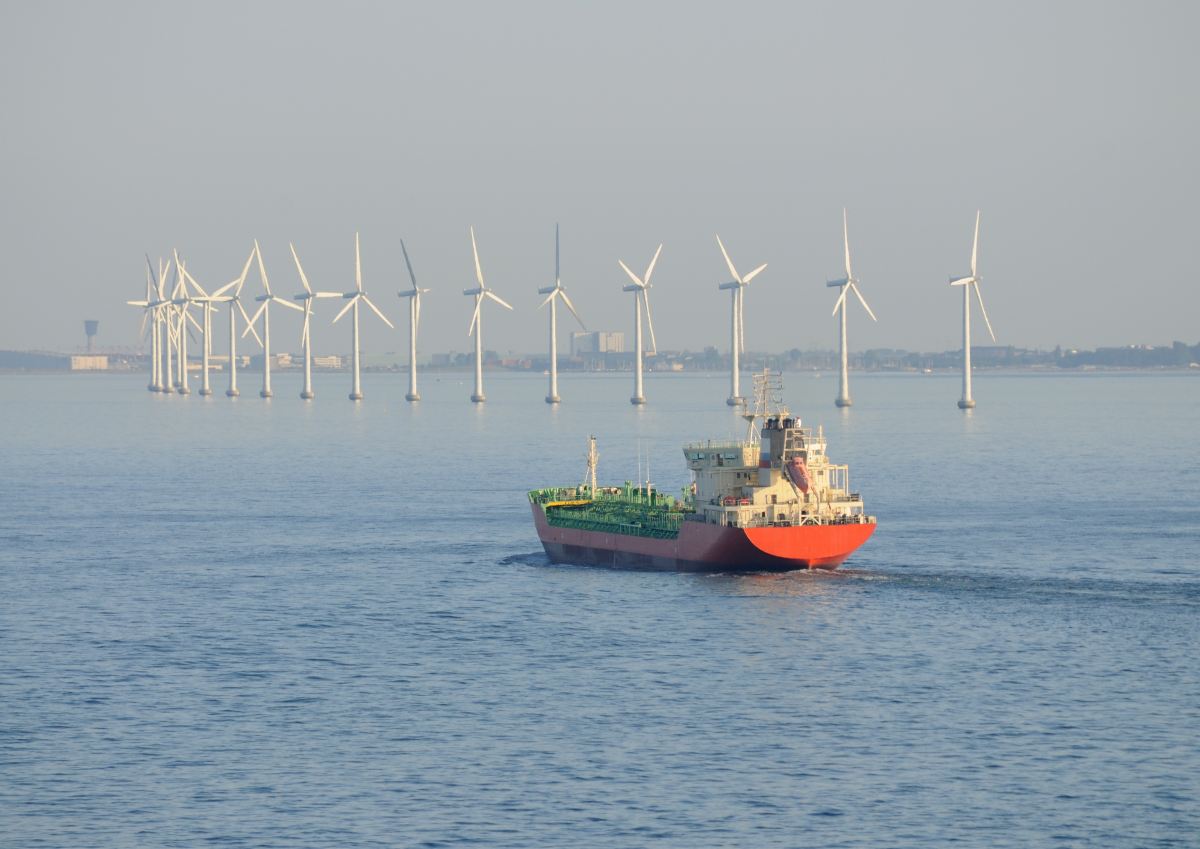
Foreign-flag vessels in Polish maritime areas – new requirements for ships working on offshore wind projects

The new rules introduce a requirement to obtain an operating permit for certain foreign vessels operating in Polish maritime areas. This is an important change for shipowners, operators and contractors involved in offshore wind projects in the Baltic Sea.

In practice

If a foreign vessel is expected to operate in Polish maritime areas for more than 14 days in a year, the requirement to obtain an operating permit should be factored in already at the contract and charter planning stage.

The October 2025 amendment to the Act on Promoting Electricity Generation from Offshore Wind Farms, commonly referred to as the Offshore Wind Act, attracted a great deal of attention. Much less attention was paid to the amendment to the Maritime Safety Act, even though, from the perspective of the offshore market, it may have significant practical consequences.

The new provision addresses a problem that the offshore sector and shipowners had been facing for several years. It concerns the lack of real requirements and effective supervision over certain foreign non-convention vessels operating in Polish maritime areas.

The new Article 86¹ applies to foreign-flag vessels that are not subject to the SOLAS Convention, that is, the international safety requirements for larger ships. In practice, this mainly concerns smaller working vessels below 500 gross tons, including Crew Transfer Vessels (CTVs), guard vessels, survey vessels, small port tugs and other vessels supporting offshore operations. These are the vessels that carry out many of the day-to-day tasks required for the construction and operation of offshore wind farms.

Why this change was needed

Under the previous rules, the Polish maritime administration did not have effective tools to supervise some of these foreign vessels when they operated in Polish maritime areas. In practice, some of them operated on the basis of national certificates issued by the flag state, for example the MCA Small Commercial Vessel Certificate in the United Kingdom.

Such documents were not always regarded as equivalent to the class assigned by recognised classification societies that are members of IACS, the International Association of Classification Societies. These include, among others, DNV, Lloyd’s Register, Bureau Veritas and the Polish Register of Shipping (PRS).

This mattered not only for safety, but also for market competition. Some foreign shipowners could offer services at a lower price because they did not bear the same costs related to class, technical supervision and compliance that, in practice, were imposed on entities operating under the Polish flag.

The issue became more visible as offshore projects in the Baltic Sea developed and more foreign vessels started to work there on a permanent basis.

What the amendment changes

If a foreign-flag vessel that is not subject to the SOLAS Convention is to operate in Polish maritime areas for more than 14 days in a calendar year, the shipowner must first obtain an operating permit.

The permit is issued by the director of the competent maritime office. An inspection by a recognised classification society is also required.

What documents need to be prepared

In particular, the application should include:

  • a description of the planned operation of the vessel, including routes, home port and the planned duration of offshore operations,
  • consent from the flag state administration,
  • the vessel’s certificates and class documents,
  • a document confirming that the vessel meets requirements no less stringent than those applicable to vessels under the Polish flag; this document should be issued by a recognised organisation after a technical inspection of the vessel.

The permit may be issued for a maximum period of five years, but not longer than the validity period of the vessel’s documents.

What this means for the market

From a market perspective, this is an important change.

First, it increases the level of safety because a real technical inspection is carried out before a vessel is allowed to operate.

Second, it reduces competitive differences between vessels under the Polish flag and those under foreign flags.

Third, it affects the planning of contracts and charter arrangements because the permit procedure must now be taken into account at an early stage.

How it works in practice

The Maritime Office in Gdynia has already published a procedure describing how to obtain the permit. It makes clear, among other things, that the authority does not assist in obtaining the document from a recognised organisation, so the shipowner is responsible for preparing the complete set of documents.

The procedure also indicates the applicable inspection fee and assumes that the proceedings should be completed within one month from the submission of a complete application.

Summary

The new rules close an important gap in the system and introduce more uniform requirements for vessels working on offshore wind projects in Polish maritime areas.

For shipowners, operators and contractors, the message is clear: when planning the operation of foreign vessels in the Polish part of the Baltic Sea, it is now necessary to consider not only operational and contractual matters, but also the obligation to obtain the relevant permit.

Contact

Do you have questions about vessel operations in offshore wind projects, maritime administration requirements or planning vessel operations in Polish maritime areas?

Contact the lawyers at Wind & Water Legal Zbroja Adwokaci i Radcowie Prawni sp. k. We advise on vessel operation planning, administrative obligations and mitigating regulatory risks related to offshore wind projects in the Baltic Sea.

International Speed Business Mixer in Gdańsk

On 14 April 2026, the International Speed Business Mixer took place at the Arche Hotel Gdańsk Airport. This networking event was organised by the Scandinavian-Polish Chamber of Commerce (SPCC) in collaboration with bilateral chambers of commerce. Sandra Murawska represented the firm. 

The meeting brought together representatives from various sectors and companies interested in developing business relationships, sharing experiences and establishing new contacts. 

The format of the event was based on short, twenty-minute table meetings, conducted according to an individually prepared schedule. This model allowed participants to hold numerous substantive discussions in a relatively short time, learn about the business profiles of other attendees and quickly identify areas of potential cooperation. 

What particularly set this event apart was its pace, excellent organisation and the practical nature of the discussions. The speed business mixer demonstrated that networking does not have to mean solely casual, random encounters – it can also be a well-planned process that genuinely supports the development of business relationships. 

An important addition to the table part of the event was the networking session that followed over dinner, which provided an opportunity to continue the conversations that had begun, deepen relationships and exchange business cards in a less formal atmosphere. It was precisely this combination of a structured meeting format with an open networking session that contributed to the high value of the event. 

Taking part in the International Speed Business Mixer was a very positive experience and confirmed that such initiatives are an effective way to build networks, discover new business opportunities and open to collaboration. 

We would like to thank the Scandinavian-Polish Chamber of Commerce (SPCC) for organising the event so efficiently, and the Arche Hotel Gdańsk Airport for providing excellent facilities for discussions and networking!

Changes to the AML Package – is the yachting industry facing a revolution? 

It is the middle of summer 2027. You are a broker/dealer and are just finalising the sale of a yacht worth 8,000,000 euros to a client from Dubai. The client is paying by bank transfer. As usual, you check the documents, but…

…this time, you must report the entire transaction to the General Inspector of Financial Information (GIIF), gather full UBO documentation, ascertain the sources of the client’s funds and assets, and carry out what is known as enhanced due diligence. You must do this before signing the contract. 

The bank will also report the transaction to the GIIF. 

And if you fail to do so, you could face a fine. 

From 10 July 2027, this is exactly how the sale of superyachts will work across the European Union. 

In recent years, the yachting industry has been subject to strict supervision. However, the obligations of buyers and brokers have focused on limiting cash transactions. 

That is now coming to an end. 

In 2027, the AMLR Regulation will come into force. It will introduce uniform, directly applicable rules for the entire market. Many of the changes will affect, amongst other things, high-value goods. But is that all? In our view, the changes may not be limited to them alone. 

What will change 

The new regulations will introduce two main changes: 

  1. direct obligations for those trading in high-value goods (vehicles worth over 250, 000 EUR, yachts worth over 7, 500, 000 EUR),
  2. indirect obligations for the entire yachting industry. 

The obliged entity will be a person trading in high-value goods as part of their usual or core professional activities. 

This means that the obliged entity will be a broker or dealer who offers (even occasionally) yachts worth over 7, 500, 000 EUR. 

Direct obligations: 

When selling high-value yachts for non-commercial purposes, a broker or dealer will be required to: 

  • report the transaction to the GIIF,
  • carry out full due diligence, including verifying the source of the buyer’s funds and assets. 

Indirect obligations: 

Although the regulations explicitly refer to vessels costing more than EUR 7,500,000, we cannot rule out the possibility that, after 10 July 2027, the entire yachting industry will be classified as a high-risk sector. 

The regulation contains the following information: 

Motor vehicles, vessels and aircraft in the higher market segments are exposed to the risk of being misused for money laundering and terrorist financing due to their high value and the fact that they are suitable for transport. 

This provision alone does not broaden the definition of vessels as “high-value goods”. However, given that banks have hitherto assessed each transaction for money laundering and terrorist financing risks, such a provision in the regulation could result in the entire industry being classified as high-risk in the upper sector, i.e. regardless of the value of the yacht. 

Three market segments – how the changes will affect you 

After 10 July 2027, the yacht market will be divided into three segments: 

  1. superyachts,
  2. mid-range yachts,
  3. small yachts. 
Market segment Yacht value Broker/dealer’s direct responsibilities Impact on cooperation with banks and clients
Superyachts over 7.5 million EUR Full AML + mandatory reporting to GIIF Heaviest burden – automatic reporting + enhanced due diligence
Mid-range yachts 100,000 – 7.5 million EUR No automatic reporting Banks will require more documentation, including information on the source of funds/source of wealth, UBO, and PEP and sanctions screening. Transactions will take longer to process.
Small / recreational yachts under 100,000 EUR No direct obligations Lowest impact, but in the case of unusual clients or payments from third countries, banks may request additional information.

Summary 

From 10 July 2027, the most significant changes will affect brokers/dealers of superyachts valued at over 7.5 million EUR. They will become obliged entities and will be subject to a number of new obligations. 

In addition, transactions involving yachts valued at over 7.5 million EUR will be subject to reporting (by both the broker/dealer and the bank). 

However, the entire industry may feel the effects of the banks’ stricter policies. Yacht transactions will be regarded as high-risk transactions. For your clients, this means having to prepare a much larger volume of documentation. As a broker or dealer, you will need to take this into account when structuring transactions and assessing when a contract might be finalised. 

This shouldn’t be a significant change for small and medium-sized brokers, but it’s certainly worth factoring it into your business model now. Especially if you’re targeting the sale of higher-value yachts. 

In the next articles in this series, we’ll break the topic down into its constituent parts and answer the following questions: 

  • exactly who will be considered an obliged entity,
  • what obligations will apply to obliged entities, and what obligations will apply to other brokers,
  • what additional obligations will arise when selling a yacht exceeding the price limit,
  • what due diligence and cooperation with banks will look like in practice,
  • how to prepare your company for the new reality. 

If you don’t want to miss these articles, we invite you to subscribe to our newsletter.