Is plain language simple? 

“I didn’t spend all those years studying just to write in plain language now.” This is a sentence I once heard from a fellow lawyer. It was at the very beginning of our struggle to implement plain language at Zbroja Adwokaci. A struggle – there is no better word for it –because for us, lawyers, the greatest difficulty in using plain language is a mental barrier. 

And even once that barrier is overcome, there are many habits we simply must unlearn, which is often harder than learning something from scratch. 

What plain language is really about 

It is only about one thing: making sure people understand you. Here and now. So that they do not have to spend an hour deciphering an email from a lawyer – especially when they need to decide in five minutes. So that after the first interaction, they still want to talk to you and are not afraid to do so. Without analyzing whether they are asking a smart or a stupid question. Without wondering whether they have really understood the answer and then looking for confirmation online. 

Why it is so difficult 

Because no one ever taught us communication. We were taught only how to use language correctly. Of course – just to be clear – plain language is also the correct language. It is, and must be, correct in every aspect: stylistic, grammatical, punctuation-related – without that, it simply would not be clear. 

But above all, language must be understandable and consider who we are speaking to and what we want to convey. 

Sometimes I have the impression that lawyers’ conversations and written submissions are like ceremonial tributes, meant to showcase their knowledge, eloquence, and years of education. The recipient becomes little more than an object onto which these golden thoughts are bestowed. It does not really matter what they do with the information, or whether they process it at all. What matters is that, from my side, everything looked impeccable. 

That said, to be fair – implementing plain language is often not a problem on our side alone. Clients, too, have a mental barrier when it comes to documents in which at least several pages are not filled with verbatim quotations from statutes. 

For us, quoting the law is very safe – safer than explaining a provision in our own words and risking that the client or the opposing party will draw different conclusions. Of course, we must be cautious. But let us avoid becoming like doctors who quote the name of a disease straight from a medical classification without explaining what is actually wrong, because the patient might misunderstand and later make a claim. Or like car mechanics who do not even care whether anyone understands them, because the car will be left for repair anyway. 

Our value lies in partnership 

Pioneers never have it easy. Still, plain language is one of the fundamental features of communication through which we strive to stand out. We want to be partners to our clients and support them in understanding the legal environment – also through the language we use.


Yacht keel and copyright – an unusual pair

Copyright law is often associated only with the artistic industry. The first things that come to mind are songwriters, screenwriters, or authors of books. 

However, this law has a broader, often overlooked scope of application. It plays an important, sometimes quite problematic, role also in the maritime industry and the yacht manufacturing sector. 

For example – who holds the copyright to a yacht’s keel? The project commissioner, the architect, or the shipyard that turns the design into a tangible product? 

Copyright to a yacht’s keel – who owns it?

The Polish Copyright and Related Rights Act clearly states that copyright belongs to the creator of the work. A work is defined as a manifestation of creative activity that has an individual character, is established in any form, regardless of its value, purpose, or manner of expression. 

In the production of a yacht’s keel, with three parties involved: 

  • the client commissioning the design and production of the keel,
  • the architect who prepares the design,
  • and the shipyard that brings the design to life, 

the architect is considered the creator under copyright law. Therefore, the architect will hold both economic and moral copyrights. 

If the architect (the creator) is employed under an employment contract, the employer will acquire the economic rights to the work within the limits defined by the employment agreement. 

Thus, if the client wishes to use the keel design without infringing anyone’s rights, they should sign an agreement in which the architect transfers all economic copyrights to them. 

Provisions in the agreement 

This means that in the contract for designing the yacht’s keel, the provisions for the transfer of all economic copyrights and related rights to the client should be included. The safest moment for the transfer of these rights is when the project is handed over to the client. Additionally, it is worth including a clause stating that the creator authorizes the client to exercise their moral rights, and the creator agrees not to exercise those rights. 

With such an agreement in place, the client will reduce the risk of a conflict with the creator of the keel design and will be able to freely dispose of the project, allowing the shipyard to build the yacht’s keel and ultimately the finished vessel. 

CV that makes sense to us 

Career dilemmas 

When applying for a job, it’s common to wonder what exactly to put on your CV. Which experiences? Which skills? All your education or just the most recent? 

Some say that depending on the position, certain things are better left unsaid, while others are irrelevant – or simply don’t matter. And, in most cases, that’s true. 

A Graphic designer who wanted to be a secretary 

Once, we were looking for someone to join our law firm’s administrative team. In the job posting, we clearly described the role, outlined our expectations, and detailed the responsibilities. We received many applications – some closely matched the posting, others less so. But one application left us completely puzzled. 

It was from a graphic designer, and everything on their CV related to their design work. Not once did it mention any experience relevant to secretarial work. Instead, there was a long list of design achievements, software skills, and projects. We tried to connect the dots, but in the end, we concluded that the candidate had probably just applied for the wrong job. 

Read before you apply 

This example makes an important point: to respond effectively to a job posting, you first must read it. And, obviously, if you’ve spent your career as a doctor, don’t apply for a position as an attorney at law. 

What actually matters 

CVs for those starting their careers can – and should – be broader. If you’re a law student or a first – year legal trainee, you probably don’t have extensive experience as a lawyer. That’s fine. Internships, legal clinics, or volunteer work during your studies are invaluable – they show that you wanted more than just lectures, that you were eager to gain practical experience. 

At this stage, almost everything you’ve done so far is relevant. 

When we consider bringing someone onto our team, we pay attention not just to your CV, but also to what we can read between the lines: were you active, do you work well in a team, have you co-organized events, do you follow through on ideas, have you stayed committed to an organization for more than a month? 

Growth is our core value 

Include summer jobs, like camp counselor or restaurant waiter. To us, they signal independence, initiative, and a willingness to take responsibility. Most importantly, they show you’ve gained customer service experience! 

And if that summer job was abroad, we’ll assume you’re not afraid of challenges – and that you’re motivated to grow. 

When writing a CV, think broadly. There’s no job where the only thing that matters is being a top student with perfect grades. You never know which experience could become your strongest asset – especially at the start of your professional journey. 

And the time for technical expertise will come. At our law firm, the most important value is growth: the growth of our clients, our firm, and our lawyers. 

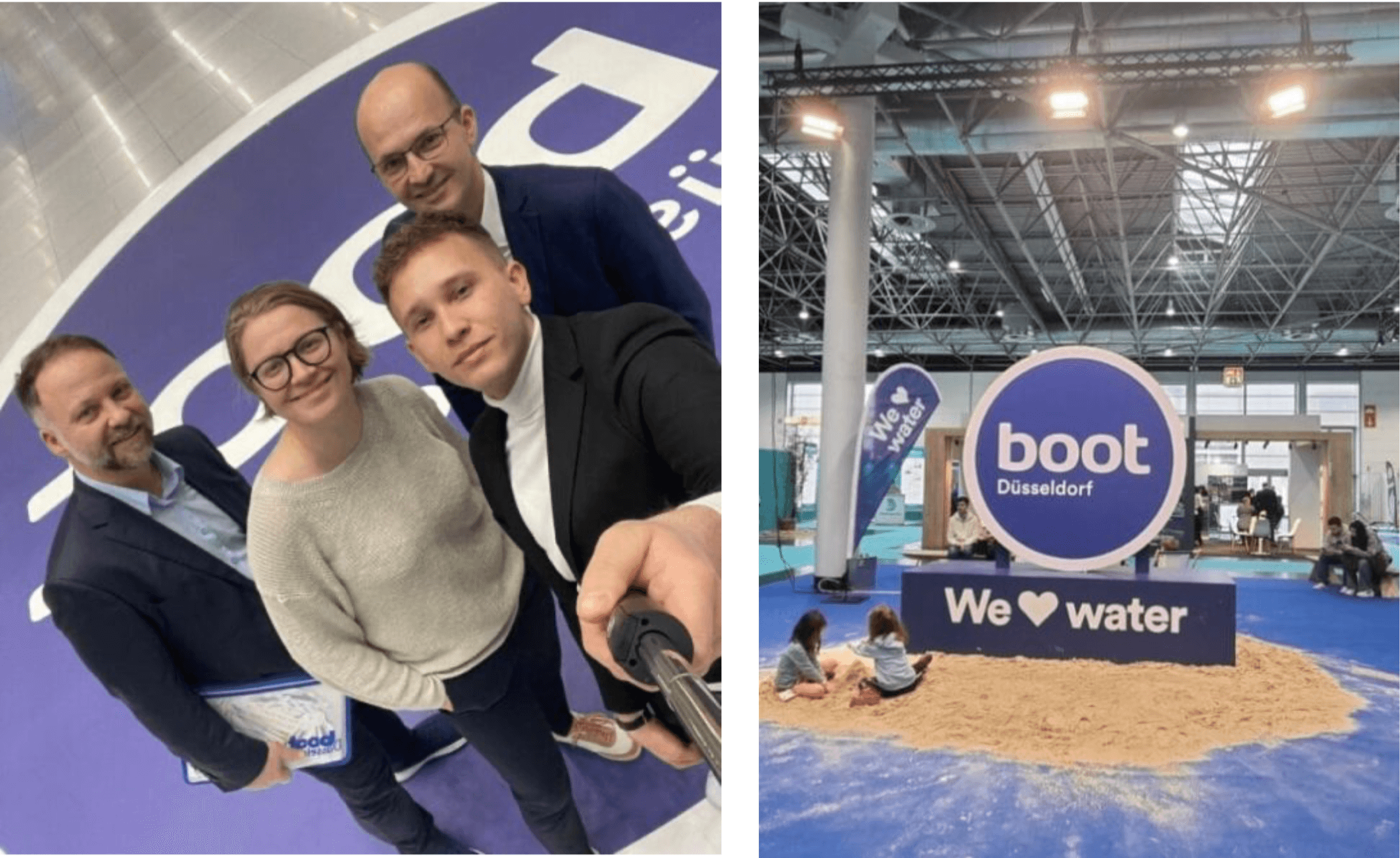
BOOT Düsseldorf 2025 – trends, challenges and legal aspects for the yachting industry 

BOOT Düsseldorf 2025 was a unique opportunity to assess the current state of the European yachting market amid ongoing economic and geopolitical challenges. Despite supply chain limitations, sanctions, and a shifting global economic landscape, the yacht industry remains highly active. Even amid the prevailing crisis, the number of product launches and the growing interest across different yacht categories are optimistic signs for the market’s continued development. 

As usual, the trade fair brought together an impressive 1,500 exhibitors from 67 countries, showcasing over 1,000 vessels across 16 exhibition halls. 

But the event wasn’t just a stage for technological innovation. It also served as a hub for intensive business meetings, discussions about market challenges, and new contract negotiations. 

New developments and trends in the yacht segment 

One of the leading trends at this year’s edition was the growing importance of sustainable technologies in yacht manufacturing. Builders are increasingly investing in eco-friendly propulsion systems – from hybrids to fully electric engines. 

There is also a growing demand for automation and artificial intelligence in navigation and vessel management systems. 

Meanwhile, rising client expectations for personalization are pushing shipyards to offer more flexible solutions – from custom interior layouts and finishes to individually configured power and energy management systems. 

Legal challenges in the yachting sector 

The trade fair also provided an opportunity to discuss key legal issues that have become increasingly relevant for premium yacht manufacturers, dealers, and buyers. 

Our law firm was represented by: 

Here are some interesting highlights: 

   1.  Place of delivery and VAT in international transactions

One of the most frequently raised issues was the ambiguity in determining the place of yacht delivery and its VAT implications. 

Differences in VAT treatment across jurisdictions, along with the possibility of applying the Temporary Admission (TA) procedure for non-EU vessels, meant that transactions require thorough legal analysis. VAT risk management varies depending on whether the conversation involves a shipyards, dealer, broker, or end buyer. 

   2.  Certification and regulatory compliance 

The rapid development of propulsion technologies is placing greater emphasis on yacht certification requirements. 

Safety standards and environmental regulations are becoming more stringent, and vessels must meet new regulatory demands – particularly when they are intended for operations across multiple jurisdictions. 

   3.  Intellectual property protection 

For shipyards and manufacturers, protecting their innovations through patents and design rights is becoming increasingly crucial. 

Given the pace of technological progress and intensifying competition, the risk of IP infringement is growing. 

   4.  Distribution and partnership agreements 

We are seeing rising interest in the Polish market, due to its access to the EU and its strengthening economic position. Poland is increasingly viewed not only as a registration hub but also as a base for yacht manufacturing, distribution, and servicing. 

More and more Polish shipyards and equipment manufacturers are eyeing exports – particularly to the U.S. market. This brings challenges related to distribution and dealer agreements, which must account for the specifics of foreign jurisdictions. 

   5.  Operational and financial risk management 

A key discussion topic was operational risk management, which – in such a dynamic environment – requires both flexibility and precision. 

Yacht transactions often involve significant sums, making it essential to safeguard the parties’ interests with carefully drafted contractual clauses. 

We held many discussions with shipyard, dealers, and our partners – including Pantaenius Poland and European Yachting Lawyers. 

Macroeconomic challenges facing the yacht industry 

An interesting topic at the fair was the inauguration of President Donald Trump. Initial optimism surrounded the possibility that the new administration would not raise taxes for American clients – a factor that could sustain or even boost sales of European yachts in the U.S. 

However, concerns quickly emerged about potential new tariffs on EU goods, casting uncertainty over the future of transatlantic yacht trade. 

Changing scale of the event 

One noticeable trend at this year’s show was its smaller scale compared to previous years. Some key players, such as Bavaria, Hanse, and Windy, were absent, and certain halls featured empty spaces where exhibitors had opted out. 

Some companies took advantage of the absence of competitors to expand their booths. Polish brands made a strong showing, including Galeon (with an impressive new stand), Northman (two separate spaces), Parker Poland, Cobra, Dracan, VTS, NFun, and Virtue. 

Others used the event to make their debut – such as AirMech. 

POLBOAT, led by President Michał Bąk, was once again a reliable presence, hosting the Polish stand in Hall 1 with support from a strong PAIH team. 

BOOT Düsseldorf 2025 – summary 

The yacht market – particularly in the sub12-meter segment – is currently far from ideal, and the effects of the downturn are being felt. However, from a long-term perspective, the real question is not “if”, but “when” the rebound and continued growth will come. 

BOOT Düsseldorf 2025 once again demonstrated that it’s a place where the key trends and decisions shaping the future of the industry are made. 

It was good to be part of it again.

New yacht and VAT – do you need to pay and when?

Tax matters often raise many doubts. When do we pay? Who pays, and to whom? How much? 

Let’s assume that we’re eager for a sea journey and decide to buy a new yacht. We find a good offer abroad, for example in France. We reach an agreement with the seller, pay, and receive the yacht to sail back home. Simple, right? Not entirely. There’s still the matter of VAT. 

Why VAT on yacht purchase?

While this may not surprise business owners, a regular individual may not realize that this is one of the exceptions where even a person not running a business must pay VAT. This occurs when we buy a new means of transport from another EU country. 

What is a new means of transport?

To determine whether the yacht we’re eyeing is a new means of transport, we need to refer to the VAT Act, which defines it as a vessel not longer than 7.5 meters, if it has been used for no more than 100 sailing hours on water or if no more than 3 months have passed since it was put into use. If the yacht meets these conditions and is purchased abroad, it is considered new, and VAT will need to be paid. It’s worth noting that a “new” yacht doesn’t necessarily have to be purchased directly from a shipyard or manufacturer. 

What is intra-community acquisition of goods?

Intra-community acquisition refers to the right to dispose of goods (including a new yacht) that are sent to Poland from another EU country by the supplier, buyer, or on their behalf. In the case of intra-community acquisition of a new means of transport, VAT is also applicable to individuals who are not VAT payers. 

Why VAT, even if I’m not a business owner?

The purchase of new means of transport from other EU countries is treated specifically by both EU and Polish tax law. Although this may seem strange and counterintuitive, according to the regulations, even individuals who are not running a business and are not VAT- registered are obligated to pay VAT in such situations. Furthermore, it doesn’t matter whether the seller conducted the transaction within their business activity. 

When and how much do I have to pay?

If the yacht meets the criteria to be considered a new means of transport, you must pay 23% VAT, and the tax amount will depend on the price of the yacht. The acquisition must be reported to the tax office using the VAT-10 form. The deadline for submitting the declaration is only 14 days from the receipt of the yacht (or the date of the invoice issued by the seller). 

What if I transport the yacht to another EU country, not Poland? 

If you’re transporting the yacht to another EU country instead of Poland, there’s a chance you will need to pay VAT in that country. Keep this in mind to avoid disputes with the local tax authorities. 

Summary 

So, when purchasing a yacht, make sure to check if it meets the criteria for being a new yacht according to the VAT Act. Regardless of whether you are a business owner or not running any business, you may still be liable to pay VAT.

Objection before the Patent Office – how to defend your yacht from plagiarism 

Do you design and build yachts? What if you find out that someone else has registered an almost identical design at the patent office? Do you know what you can do in that situation? How can you effectively defend your industrial design, even if you haven’t registered it yet? In this article, you will find the answers. 

Industrial design 

An industrial design is the appearance of your yacht – its shape, lines, contours, texture, or pattern of painting. By registering an industrial design, you protect yourself from being copied by competitors (including former employees who may have a slightly different idea for themselves). But what should you do when someone registers a design that is a plagiarism of your project? 

Why is someone registering my design 

The patent office, whether national, European, or international, does not examine the design in depth. It relies solely on the application. It is not uncommon for “professional registrants” to search for innovative designs and register them as their own, hoping for a lack of response from the legitimate creator. Later, they can easily reap financial benefits from the unfairly registered design, and reversing the situation is not easy. 

Legal steps 

If you notice that someone has registered a design very similar to yours, don’t hesitate to take action. First, check if the design looks identical to your yacht, or if it has been altered. Does its shape result solely from the functions it serves? If you have doubts, it is worth considering filing an objection with the patent office. 

Objection procedure 

An objection is a formal process that allows you to challenge the registration of a design that may be a plagiarism of your work. Remember that you have a limited time to file an objection – usually several months from the publication of the application in the patent office (depending on the procedure chosen by the registrant). In the objection, you must prove that the design is not new, lacks individual character, or infringes your rights. You can do this by providing all available evidence, but the most important will always be designs and photographs of your products, as well as sales documents. 

Actions by the Patent Office 

After filing the objection, the patent office will examine the case. The outcome can vary – from rejection of the competitor’s application, to modification, or even withdrawal of the design. Remember that the office conducts proceedings based on an administrative procedure, which is very strict and requires particularly good preparation from its participants. 

Summary 

If you are a creator and earn money from your innovative designs and finished products, you undoubtedly track the market and the movements of your competitors. It is also worth dedicating time and effort to monitoring official registers and conducting intellectual property audits. It is hard to imagine a worse scenario than being prohibited from producing certain units simply because you didn’t notice how someone unfairly registered your design. 

Although design registration, monitoring patent office publications, and the objection procedure may seem complicated, it is important to remember that proper intellectual property protection can significantly enhance your competitive advantage in the market. If you have doubts that someone is infringing your rights, it is advisable to seek professional legal assistance – this is key to effectively defending your intellectual property. 


Pitfalls in yacht acquisition agreements – how to avoid troubles? 

Purchasing a yacht is an exciting event, but it can also be full of surprises, especially for those who are inexperienced in such transactions. Agreements are often complex, and misunderstanding them can lead to issues. In this article, we’ll discuss the most common pitfalls you may encounter and offer advice on how to avoid them. 

Choosing a yacht 

The most important step and starting point for the entire process is to clearly define your expectations for the yacht. However, that’s not all. A common mistake is the failure to accurately specify what exactly is being purchased and who – the buyer or the seller – is responsible for what. Over time, it may turn out that additional equipment was not included, and the price of the yacht must also account for inspections, engine startup, transport, etc. 

Remember! 

The agreement (or its annex) must clearly state exactly what is being purchased and in what condition. Include provisions specifying who will be responsible for each stage. Also, attach complete documentation regarding the yacht’s history, if available.

Terms of the agreement 

A key element is the clear specification of the terms of the agreement, including financial aspects such as deposits and payment deadlines. Unclear terms in this regard are another potential source of conflict in the future. 

Often, the price is listed in the agreement, but it’s not clearly stated whether additional amounts, such as taxes or other fees, will need to be added. It is also frequently unclear which day is the official payment due date. 

Remember! 

Specify in the agreement exactly how much you will pay and whether the price includes VAT or not. Make sure to include a clause stating that the payment date will be, for example, the day you submit the transfer order or the day the funds are credited to the seller’s account. 

Legal issues 

Verifying the legal status of the yacht, including ownership rights and current registration documents and permits, is extremely important. Improper documentation can lead to serious legal and financial problems. 

Things to watch out for 

When purchasing a yacht, pay attention to several key issues: 

  • Technical condition: Conduct a thorough technical inspection of the yacht, preferably with the assistance of an experienced specialist. Check the condition of the engine, electrical systems, hydraulics, onboard equipment, as well as the hull and rigging.
  • Service history: Request the documented service history of the yacht to ensure it has been regularly serviced and maintained.
  • Sea trial: If possible, conduct a sea trial to assess the yacht’s performance on the water and check how its systems operate.
  • Ownership rights: Ensure the seller has full rights to sell the yacht and that there are no outstanding payments or encumbrances.
  • Documentation: Check the completeness and validity of the yacht’s documents, including registration certificates, permits to sail, and any other necessary paperwork.
  • Financial terms: Carefully review the financial terms of the transaction, such as the price, payment method, and any additional costs.

Do not sign a yacht acquisition agreement without thoroughly analyzing its terms beforehand. Make sure that all essential aspects of the transaction are clearly defined and understood by both parties. 

It’s worth considering the services of an experienced lawyer specializing in yacht transactions, who can help you understand and protect your rights. 

Buying a yacht is a significant investment, so it’s crucial to approach it with full awareness and caution. Utilizing professional help and thoroughly understanding all aspects of the transaction can prevent many issues. Remember, the safety and satisfaction of your yacht purchase largely depend on your attention and diligence during the agreement phase.